Mushroom farming is gaining immense popularity in India due to its low investment, high profitability, and year-round cultivation possibilities. Among various types of mushrooms, button mushrooms are the most widely consumed and commercially cultivated. If you’re looking for a scalable agribusiness opportunity, understanding the mushroom production process and mastering how to start button mushroom farming could be your path to success. Modern mushroom technology has also made it easier for small and medium-scale entrepreneurs to grow and process mushrooms efficiently.
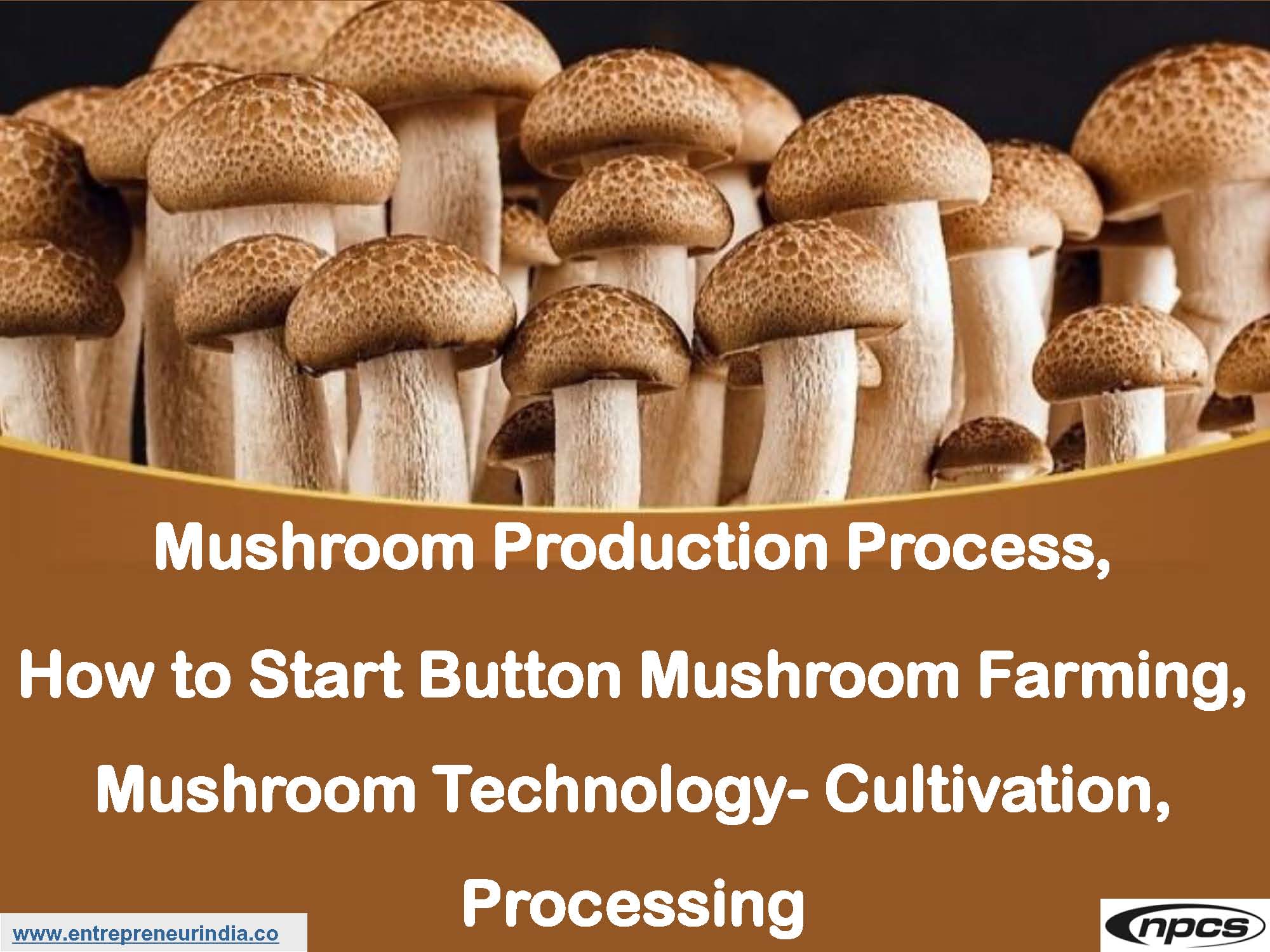
Mushroom Production Process, How to Start Button Mushroom Farming, Mushroom Technology – Cultivation, Processing
This guide covers the end-to-end process of button mushroom farming—from spawn selection to post-harvest processing—making it ideal for first-time growers and agro-entrepreneurs.
1. Why Choose Mushroom Farming?
Mushroom cultivation requires relatively little land, less water, and can generate high returns in a short time. It is especially suitable for:
Marginal farmers
Unemployed youth
Women entrepreneurs
Urban and semi-urban growers
Benefits of Mushroom Farming:
Quick returns (within 6–8 weeks)
Minimal space required
Rich in nutrients (protein, vitamins)
Good market demand in fresh and processed forms
Year-round production possible with controlled environments
2. Types of Mushrooms Grown in India
While there are over 2,000 edible mushroom varieties, the most commonly cultivated types in India are:
Button Mushroom (Agaricus bisporus) – Popular and profitable
Oyster Mushroom (Pleurotus spp.) – Easy to grow
Milky Mushroom (Calocybe indica) – Thrives in tropical conditions
Shiitake Mushroom – High-end, niche market
This article focuses on button mushroom farming, which commands the highest commercial value.
Also Read – How to Start a Dairy Farm Business in India
3. How to Start Button Mushroom Farming
Button mushroom farming requires a cool, moist environment and involves multiple stages of preparation. Below is a step-by-step breakdown.
A. Prepare a Detailed Business Plan
Your plan should include:
Project size (kg/month or beds)
Spawn and compost sourcing
Climate control needs
Infrastructure and equipment
Labor and packaging
Market and sales strategy
Estimated Initial Investment (Small-Scale): ?3–6 lakhs
(Larger units may require ?10–25 lakhs)
B. Infrastructure and Setup
Button mushrooms thrive best in a temperature range of 14°C to 22°C. You can grow them in:
Rooms or sheds with controlled temperature and humidity
Thatched roof huts
Underground growing chambers
Polyhouses or insulated containers
Requirements:
Clean, ventilated area (150–200 sq. ft. per 100 beds)
Racks or shelves for bag placement
Water supply and drainage
Thermometers and hygrometers
Dark environment during growth
C. Compost Preparation (Substrate)
Compost serves as the growing medium for button mushrooms.
Two Types of Compost:
Natural Compost – Straw + manure + urea + gypsum
Synthetic Compost – Wheat straw + poultry manure + chemical supplements
Steps:
Chop and soak straw
Mix with manure and supplements
Stack for fermentation (12–15 days), turning periodically
Add gypsum to balance pH
The composting process is crucial and takes 15–20 days. Pasteurization (heat treatment) follows to eliminate pathogens.
D. Spawn Inoculation
Spawn is the seed material (mycelium) used to grow mushrooms. Buy high-quality spawn from certified labs or institutes like ICAR-DMR or local Krishi Vigyan Kendras.
How to Inoculate:
Mix spawn evenly into the compost-filled bags or trays
Maintain temperature at 22–25°C for 12–14 days (spawn run phase)
Cover with moist newspaper or plastic
Spawn colonizes the substrate during this incubation period.
E. Casing Layer Application
Once the spawn run is complete, a casing layer is added to retain moisture and support fruiting.
Casing Material: A mix of garden soil + compost + lime (pasteurized)
Layer Thickness: 2–3 cm over colonized compost
Keep the casing moist but not soggy.
F. Fruiting Stage and Harvesting
Maintain conditions:
Temperature: 14°C to 18°C
Humidity: 80–90%
CO? should be ventilated out
Water the casing lightly once a day
Mushrooms Appear in 10–12 Days
Harvest when the cap is fully developed but not yet opened. Pick mushrooms every 2–3 days during the flush cycle, which can last 3–4 weeks.
Yield: Around 15–20 kg per 100 kg compost
4. Mushroom Processing and Preservation
Post-harvest processing improves shelf life and adds value. Common processing options include:
A. Drying
Sun drying or hot-air drying
Dried mushrooms are used in soups, snacks, and seasoning powders
B. Canning
Blanch in boiling water
Store in brine or vinegar solution
Vacuum seal and sterilize cans
C. Pickling
Add mushrooms to spiced vinegar and oil mixtures
D. Freezing
Clean, blanch, and freeze for longer storage
Requires deep freezer units
Packaging:
Use perforated plastic trays, punnets, or polythene bags with labels for fresh mushrooms. For dried mushrooms, use moisture-proof pouches.
5. Marketing and Selling Mushrooms
Your success depends on market access and consistent supply.
Target Markets:
Local vegetable markets
Hotels and restaurants (HORECA)
Supermarkets and organic food stores
Online grocery platforms
Export (dried or canned mushrooms)
Marketing Tips:
Highlight health benefits (rich in protein, low calories)
Offer free samples to local shops
Participate in farmer markets and food expos
You can also tie up with food processors and Ayurvedic product companies who use mushrooms in soups, powders, and supplements.
6. Mushroom Technology and Training Support
Several Indian government and private institutions provide training and spawn supply:
ICAR – Directorate of Mushroom Research (Solan, HP)
National Horticulture Board (NHB)
Agro-clinics and Agri-business Centres (ACABC)
KVKs (Krishi Vigyan Kendras) in various states
They also guide in setting up climate-controlled growing chambers and latest processing technologies.
See More – Want to Start a Business in Maharashtra
Conclusion
Understanding the mushroom production process and knowing how to start button mushroom farming are essential steps toward building a sustainable agri-enterprise. With controlled climate conditions, high-quality spawn, and proper cultivation methods, mushroom farming can yield excellent profits even on a small scale. Modern mushroom technology now enables you to grow, process, and market mushrooms year-round with minimal land and input cost. Whether you’re in a rural village or a peri-urban area, this business offers great potential for both income and employment.