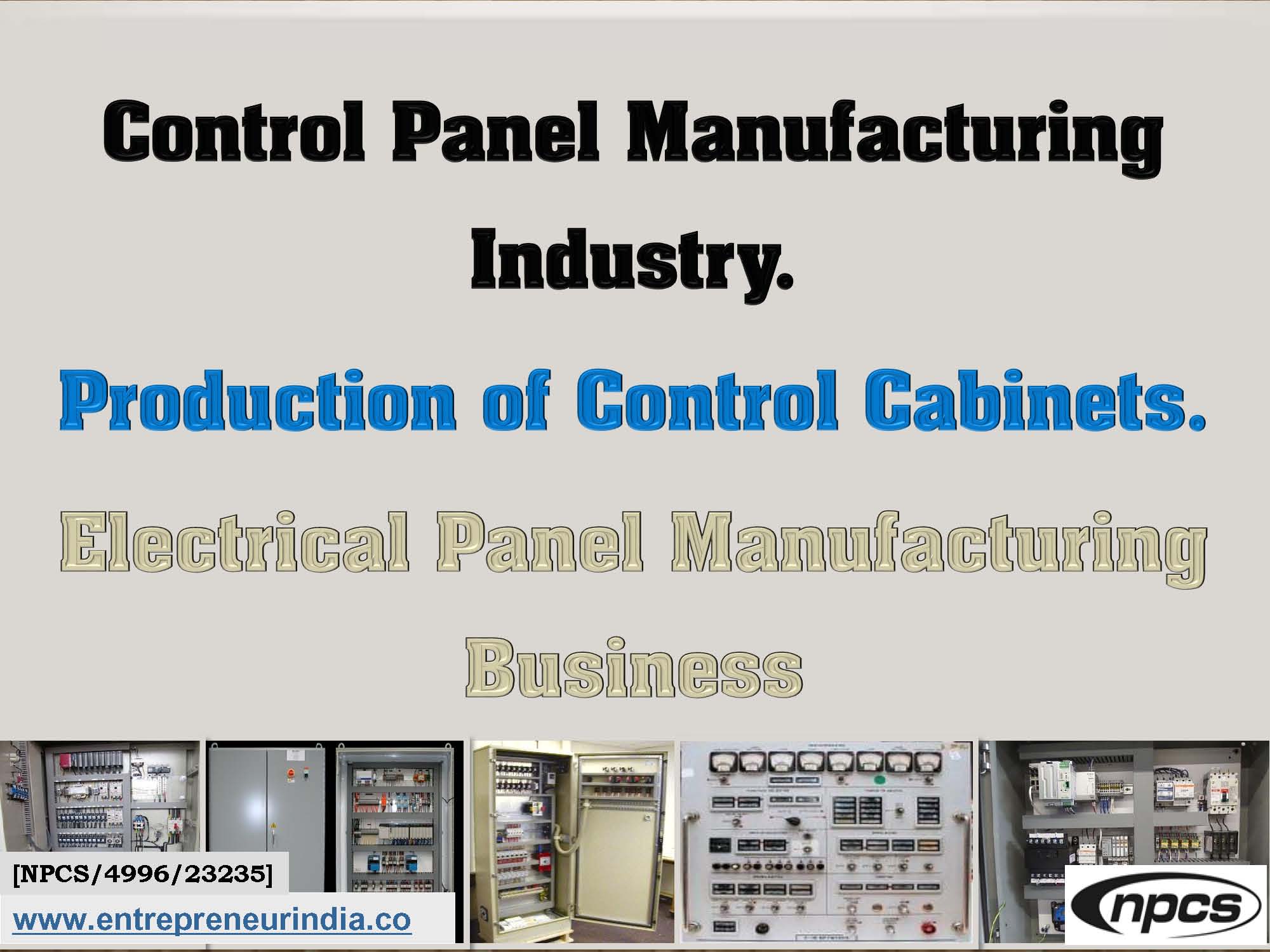
The control panel manufacturing industry is a vital part of industrial automation, electrical infrastructure, and power distribution systems. Control panels serve as the brain of any electrical system, enabling users to monitor, regulate, and control machinery, lighting, HVAC, motors, and other equipment. With rapid advancements in technology, urbanization, and industrialization, the demand for custom-built, intelligent, and safety-compliant control panels has grown exponentially. From power plants and data centers to factories and smart buildings, control panels are indispensable in ensuring seamless and safe operations.
Growing Demand for Control Panel Manufacturing
With industries transitioning toward automation and smart control systems, the need for customized, scalable, and reliable control panels has never been greater. The control panel manufacturing industry caters to a broad spectrum of sectors including automotive, oil & gas, power generation, infrastructure, and water treatment. This industry is driven by innovations in electrical engineering, integration of IoT devices, and increasing government mandates for energy efficiency and safety.
Types of Control Panels Manufactured
Control panels come in various types depending on the application, power requirement, and level of automation. The most common types include:
Power Control Panels (PCC Panels): Used for controlling high voltage power distribution systems
Motor Control Centers (MCC Panels): Designed for managing multiple motors in industrial setups
Automation Control Panels (PLC/SCADA-based): Enable automation using programmable logic controllers
APFC Panels (Automatic Power Factor Correction): Help improve power factor and reduce electricity bills
Lighting Control Panels: For controlling lighting loads in commercial and industrial buildings
VFD Panels (Variable Frequency Drive): Regulate motor speed and reduce energy consumption
Each panel is custom-designed based on client requirements, including dimensions, protection systems, wiring layout, and integration with monitoring devices.
Materials and Components Used in Manufacturing
Manufacturing high-quality control panels requires precision engineering and reliable components. The key materials and parts include:
Mild Steel or CRCA Enclosures: Powder-coated for corrosion resistance
Busbars: Made from copper or aluminum for high current flow
Circuit Breakers and Relays: For safety and switching control
Contactors and Overload Relays: To protect motors and electrical systems
PLC, HMI, and SCADA Systems: For smart automation and remote control
Cables, Terminal Blocks, and DIN Rails: To facilitate structured wiring and mounting
All materials must comply with standards like IEC, IS, NEMA, and UL, ensuring safety and operational reliability.
Manufacturing Process of Control Panels
The production of a control panel involves several stages that require accuracy, design expertise, and technical skill:
Client Requirement Analysis: Understanding the electrical load, application, and automation needs
Design & Engineering: Using CAD/CAE software to create detailed wiring diagrams and enclosure layouts
Component Selection: Choosing reliable branded components that meet technical specifications
Sheet Metal Fabrication: Cutting, bending, and welding enclosures as per design
Wiring & Assembly: Panel wiring, mounting of devices, busbar installation, and terminal connection
Testing & Quality Check: High-voltage testing, insulation resistance testing, and functional performance validation
Dispatch & Installation: Delivery of panels and on-site commissioning
Each step is monitored closely to ensure the panel meets international electrical safety norms.
Applications Across Various Industries
The control panel manufacturing industry supports mission-critical functions across multiple sectors:
Industrial Automation: Managing production lines and CNC machines
Renewable Energy: Integrating solar/wind systems with smart control panels
Infrastructure Projects: Power distribution in smart cities, metros, airports, and highways
Utilities and Power Plants: Generator synchronization panels, grid control panels
Oil & Gas: Hazard-proof panels for hazardous area zones
Data Centers: Electrical panels for managing redundant power systems and load sharing
Each sector has unique compliance requirements, making customization and adherence to standards crucial.
Quality Standards and Certifications
To ensure durability, safety, and performance, manufacturers follow recognized standards and obtain necessary certifications such as:
ISO 9001:2015 – Quality management systems
IEC 61439 – Low-voltage switchgear and control gear assemblies
UL and CE Marking – For exporting to US/EU markets
IP Rating Certification – To indicate ingress protection against dust and water
Factory Acceptance Testing (FAT) and Site Acceptance Testing (SAT) – To validate system performance before and after installation
Such certifications are essential to gain trust, especially for export or government tender projects.
Opportunities and Market Trends
The global control panel manufacturing industry is projected to grow steadily due to the following trends:
Industry 4.0 and Smart Factories: High demand for IoT-integrated control panels
Renewable Energy Projects: Need for solar combiner panels, inverter panels
EV Charging Infrastructure: Panels for power management in electric vehicle stations
Smart Buildings: Demand for intelligent lighting and energy management panels
Government Focus on Make-in-India & Infrastructure Development: Boosting domestic manufacturing
Startups and MSMEs in this space are also leveraging cloud-based HMI/SCADA systems to offer remote control and analytics features.
Challenges in the Industry
Despite its growth, the control panel manufacturing sector faces several challenges:
Shortage of Skilled Labor: Especially in high-end automation panel wiring
Procurement Delays: Due to global supply chain disruptions
Price Competition: Especially from low-cost manufacturers compromising on quality
Complex Compliance Requirements: For panels used in export or hazardous areas
Overcoming these requires strategic investments in R&D, training, and supplier partnerships.
Starting a Control Panel Manufacturing Unit
For entrepreneurs, setting up a manufacturing unit offers significant potential. Key steps include:
Space Requirements: 2000–5000 sq. ft. with dedicated testing and wiring sections
Machinery and Tools: CNC shearing, bending machines, crimping tools, multi-test benches
Skilled Team: Electrical engineers, panel wiring technicians, and QA personnel
Licenses Required: Factory license, BIS certification, GST registration, and pollution control clearance
Target Clients: OEMs, EPC contractors, industrial plants, infrastructure developers
A focused approach on niche segments like automation panels or solar panels can help gain a competitive edge.
Conclusion
The control panel manufacturing industry is a backbone of modern electrical and automation systems. With advancements in energy management, smart technology, and industrial digitization, this sector is ripe for innovation and investment. Whether for large industrial complexes or decentralized solar units, control panels are indispensable—and so is the growing network of skilled manufacturers who build them with precision and compliance.
Niir Project Consultancy Services
An ISO 9001:2015 Company
106-E, Kamla Nagar, Opp. Spark Mall,
New Delhi-110007, India.
Email: npcs.ei@gmail.com , info@entrepreneurindia.co
Tel: +91-11-23843955, 23845654, 23845886, 8800733955
Mobile: +91-9811043595
Website: www.entrepreneurindia.co , www.niir.org