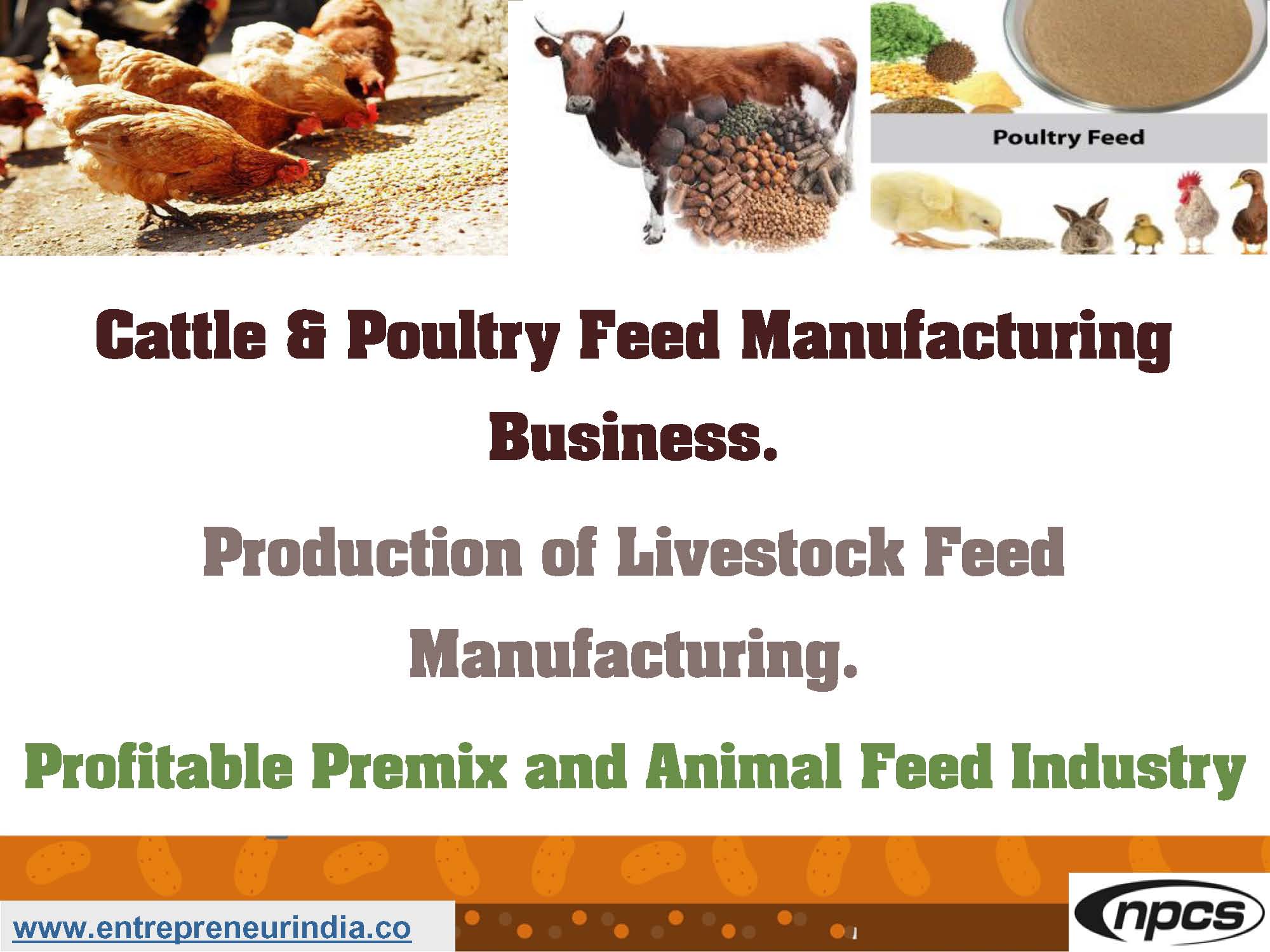
The cattle and poultry feed manufacturing business is one of the most promising sectors in the agribusiness ecosystem. With the increasing demand for dairy products, meat, and eggs, farmers are shifting toward commercial feed solutions that ensure high productivity and optimal animal health. This has created a consistent demand for scientifically formulated feed for cattle, broilers, and layers. Starting a cattle and poultry feed manufacturing business provides entrepreneurs with a scalable opportunity to serve both small and large-scale livestock farmers while contributing to food security and agricultural development.
Understanding the Market Demand
The livestock industry is expanding rapidly, especially in emerging economies. India’s dairy industry is the largest in the world, and poultry farming has seen exponential growth in the last two decades. This has led to a booming requirement for balanced feed that can boost milk yield in cattle and egg or meat production in poultry.
The cattle and poultry feed manufacturing business caters to:
Dairy farms producing milk from cows and buffaloes
Broiler farms raising chickens for meat
Layer farms focused on egg production
Mixed livestock farms that require diverse feed formulations
As awareness of animal nutrition increases, farmers prefer branded and nutritionally certified feed over home-mixed or locally sourced options. This market shift ensures long-term demand for quality feed manufacturers.
Types of Cattle and Poultry Feed
The cattle and poultry feed manufacturing business requires different feed formulations depending on the type and age of livestock:
Cattle Feed
Calf starter and grower feed
Dairy feed for lactating cows and buffaloes
Dry cow feed and transition rations
Mineral mixture supplements
Poultry Feed
Chick mash for 0–8 weeks
Grower feed for 9–20 weeks
Layer mash or pellets for egg-laying hens
Broiler starter, grower, and finisher feed
Each feed type varies in protein, energy, fiber, calcium, phosphorus, and vitamin content, formulated to promote growth, production, and health.
Raw Materials Required
A major part of success in the cattle and poultry feed manufacturing business lies in sourcing high-quality raw materials. Some of the commonly used ingredients include:
Cereal grains: Maize, broken rice, wheat
Oilseed cakes: Soybean meal, groundnut cake, cottonseed cake
Bran and by-products: Wheat bran, rice bran
Protein supplements: Fish meal, meat meal, blood meal
Fats and oils: Vegetable oils, animal fat
Additives: Salt, limestone powder, bone meal, mineral and vitamin premixes, toxin binders, probiotics
Availability and cost-efficiency of these materials directly affect your production margin and product pricing.
Feed Manufacturing Process
To operate a successful cattle and poultry feed manufacturing business, understanding the production workflow is essential:
Grinding: All solid ingredients are ground into uniform particle size
Batch mixing: Dry ingredients are proportionally combined in batch mixers
Pelleting (optional): Mixed feed is compressed into pellets for ease of feeding
Cooling and drying: Pellets are cooled and dried to remove excess moisture
Enrichment: Oils, vitamins, and other micronutrients are sprayed post-pelleting
Packing: The finished product is weighed and packed in moisture-proof bags
Pellet feed is increasingly popular due to its digestibility, cleanliness, and reduced feed wastage.
Plant Setup and Machinery
Starting a cattle and poultry feed manufacturing business requires setting up a production unit equipped with:
Hammer mill or pulverizer
Batch mixer or ribbon blender
Elevator and conveyor systems
Pellet mill (optional but recommended)
Cooling tower and dryer
Weighing and packaging machine
Storage silos for raw materials and finished goods
A small-to-medium scale plant (1–5 tons/hour) may require an investment of ?30 lakhs to ?1.5 crores depending on automation level, brand, and location.
Quality Control and Certifications
Maintaining consistent feed quality is crucial. To ensure success in the cattle and poultry feed manufacturing business, manufacturers must:
Conduct regular nutritional testing
Avoid use of contaminated or expired raw materials
Ensure uniform mixing to prevent nutrient imbalance
Monitor pellet hardness and moisture content
Prevent fungal growth and aflatoxin contamination
Necessary certifications and compliances include:
FSSAI registration
BIS standards (IS 2052:2009 for cattle feed, IS 1374:2007 for poultry feed)
Pollution control board clearance
ISO 9001 or HACCP certification for better market credibility
Marketing and Distribution Channels
Once your cattle and poultry feed manufacturing business is operational, building a strong market presence is key. Focus on:
Direct sales to dairy farms and poultry owners
Collaboration with veterinary clinics and agri-input dealers
Participation in livestock expos and Kisan Melas
Appointment of rural distributors and stockists
Educating farmers about feeding schedules and benefits of branded feed
Offering bulk discounts, loyalty schemes, and farm advisory services builds brand trust and recurring orders.
Profitability and Return on Investment
The profitability of the cattle and poultry feed manufacturing business depends on several factors:
Raw material cost optimization
Efficient production and minimal wastage
Brand positioning and regional outreach
Bulk orders and institutional tie-ups
Seasonal demand planning (peak periods during breeding or growing cycles)
Margins typically range from 10%–25% depending on scale and market. A small plant producing 2–3 tons/hour can generate ?1.5–2.5 crores in annual turnover and achieve ROI within 2–3 years.
Government Support and Subsidies
The Indian government, through NABARD and MSME schemes, supports livestock-based industries, including the cattle and poultry feed manufacturing business. Assistance includes:
Capital subsidies for feed plants
Interest subvention on loans
Grants for innovation and R&D
Training support for technical staff
Soft loans under animal husbandry infrastructure development fund
Utilizing these schemes can significantly reduce startup costs and increase competitiveness.
Conclusion
The cattle and poultry feed manufacturing business presents a strong, recession-proof opportunity within the agribusiness sector. As livestock farming becomes more commercialized and scientific, demand for balanced, packaged feed is rising exponentially. Entrepreneurs with a basic understanding of animal nutrition and access to raw materials can capitalize on this high-potential venture.
With minimal marketing effort and consistent quality, this business promises long-term success and a recurring customer base that grows with rural and urban livestock expansion. Whether you’re a farmer, investor, or first-time agripreneur, now is the right time to establish your footprint in the animal nutrition industry.
Niir Project Consultancy Services
An ISO 9001:2015 Company
106-E, Kamla Nagar, Opp. Spark Mall,
New Delhi-110007, India.
Email: npcs.ei@gmail.com , info@entrepreneurindia.co
Tel: +91-11-23843955, 23845654, 23845886, 8800733955
Mobile: +91-9811043595
Website: www.entrepreneurindia.co , www.niir.org