
Green Manufacturing Business Ideas in India for 2026
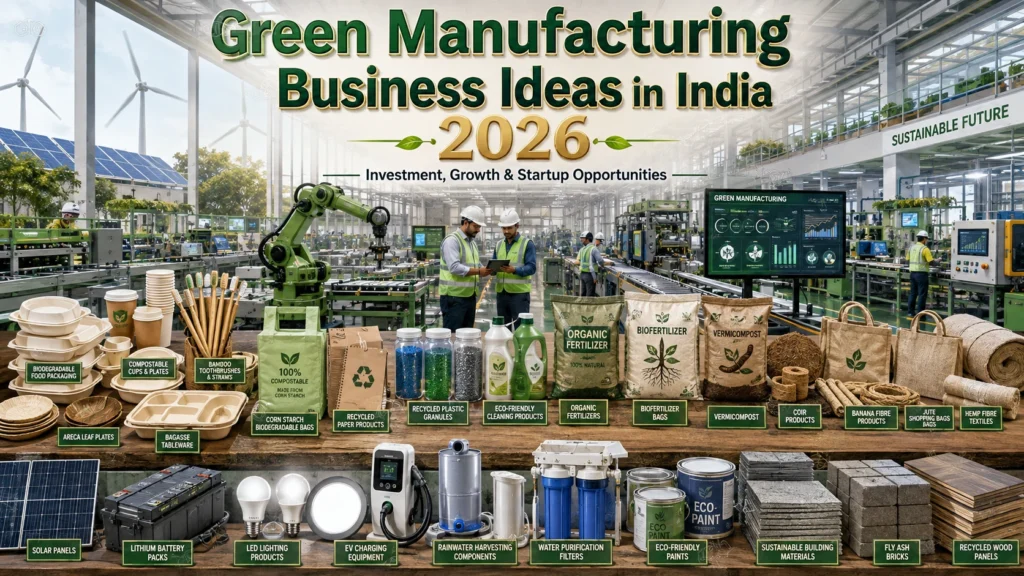
Opportunities for Circular Economy, Recycling and Eco-Friendly Products that are Profitable. The concept of sustainability has grown from being a catch phrase into a viable business model. With India taking a step toward a circular economy, recycling and eco-friendly manufacturing have become regulated, financeable, and future-proof industries. This is a once-in-a-lifetime opportunity for entrepreneurs looking for new and innovative green manufacturing business ideas in India for 2026. There are several trends pushing demand toward sustainable products, including tighter plastic bags, longer producer responsibility regulations, and green-financing incentives. The purpose of this guide is to highlight the most viable manufacturing concepts that are green and circular economy that can be pitched to startups, MSMEs and investors. Where they are successful, they have both a positive environmental benefit and a strong economic return, and many have a steady source of raw materials because they are a waste stream others are willing to pay for. Size of investment is no restriction; it is the process know-how and compliance that is important. In addition, you’ll get practical advice on licensing, government assistance, and how to take your idea from concept to product throughout. The agricultural residue, e-waste, used batteries and plastic waste that India produces annually is immense and a significant proportion of which is unutilised. Every waste stream is a raw material opportunity to a green manufacturer. Meanwhile, extended producer responsibility regulations are making brands responsible for recycling and sustainable packaging, meanwhile, which offers an assured market for conforming units. Thus, it is that green manufacturing is structurally attractive in 2026, being cheap inputs and mandated demand. Related Article: The Green Manufacturing Revolution: Paper Water Bottles, Bioplastics & Biodegradable Products Why Green Manufacturing Is Booming in India The move towards a circular economic system in India has taken recycling to an increased degree of regulation, bringing it to an industry level with long-term demand. The E-waste, battery waste and plastic reprocessing now have the regulatory certainty that provides a consistent flow of raw materials and access to green financing. Meanwhile, there is an increasing consumer demand for biodegradable and compostable products from global brands and Indian consumers which creates export avenues for eco-friendly products. Green manufacturing’s strategic value is “waste to value economics”. If your raw material is agricultural residue, old electronics or used batteries, your margins will be low, your environmental branding will be high, and you’ve got a powerful combination. Top Green Manufacturing Business Ideas in India for 2026 1. E-Waste Recycling and Metal Recovery In India, electronic waste recycling has been now legally regulated and has made the raw material available to the electronics recycling units and also created a steady demand for the recycling industry. Dematerializing copper, gold, aluminium and reusable parts from waste e-waste is a viable, eco-friendly, economically valuable scalable business. Only a tiny percentage of e-waste is processed in India and there is a huge gap in between of the organised recyclers. Building a regulated e-waste recycling centre complete with the required pollution-control and extended producer responsibility authorisations is the professional way to begin a business to securely and reliable provide this service to companies that are legally required to recycle their own products. View Full Project Details: E-Waste Recycling Projects 2. Lithium-Ion Battery Recycling As automotive and consumer electronic batteries end their service, the extraction of high-value minerals like nickel, lithium and cobalt presents an eco-friendly and economic choice. Battery recycling truly is one of the new manufacturing frontiers in India for 2026, supported by policy, and increased volumes. With India importing close to 100% of these critical minerals, it is essential that there is a strategic interest in their recovery in addition to being profitable, and cell manufacturers are more willing to purchase recovered minerals to mitigate their import risk. The first to learn the chemistry to recover the materials and to be able to obtain a regular stream of spent batteries will be able to establish a position which will serve them for decades. Read the Complete Book Here: Handbook on Lithium-Ion & Lead-Acid Battery Production and Recycling 3. PLA Bioplastic and Biodegradable Cutlery Manufacturing Poly Lactic Acid (PLA) is a biodegradable plastic, the world’s fastest growing, made from renewable corn starch. As single-use plastic restrictions increase, there is a great opportunity for restaurants, caterers and cloud kitchens to brand their cutlery, plates and packaging with PLA, a material that’s being manufactured for export. 4. Biochar Production from Agricultural Waste Biochar tackles both agricultural productivity and waste management by turning crop residue into a soil amendment and water filtration material. Crop residue is utilized as biomass in millions of tonnes every year in India which leads to air pollution; hence the conversion of this residue into a useful product has both commercial and environmental benefits. Biochar is a low barrier, high relevance, green manufacturing concept with relatively low start-up costs and increasing market relevance in the field of sustainable and organic agriculture, which is particularly suitable for bioentrepreneurs in rural regions who are close to agricultural clusters. 5. Sustainable and Biodegradable Packaging Sustainable packaging is on the rise as companies move away from plastic packaging and towards biodegradable options in response to legislation and consumer demand. The applications for bagasse tableware, moulded-fibre packaging and compostable films are of huge and increasing importance for restaurants, food delivery, airlines and e-commerce. Biodegradable packaging benefits from government incentives and increased consumer demand as single-use plastics are increasingly subject to regulation and large buyers are increasingly adopting and requiring sustainability objectives, making it one of the most bankable sustainable manufacturing ideas for 2026. Get Detailed Project Report (DPR): Biodegradable Packaging & Bio-based Polymers Guide 6. Plastic Reprocessing and Recycled Granules Plastic reprocessing units convert post-consumer and industrial plastic waste into plastic granules which are used to make plastic product. This business is now subject to the extended producer responsibility norms that guarantee it a consistent and stable supply of raw materials and sustained demand from packaging and moulding plants. Recycled content is a legal requirement and
Products from Biogas Plant Digestate: Manufacturing Process, Investment & Business Opportunities
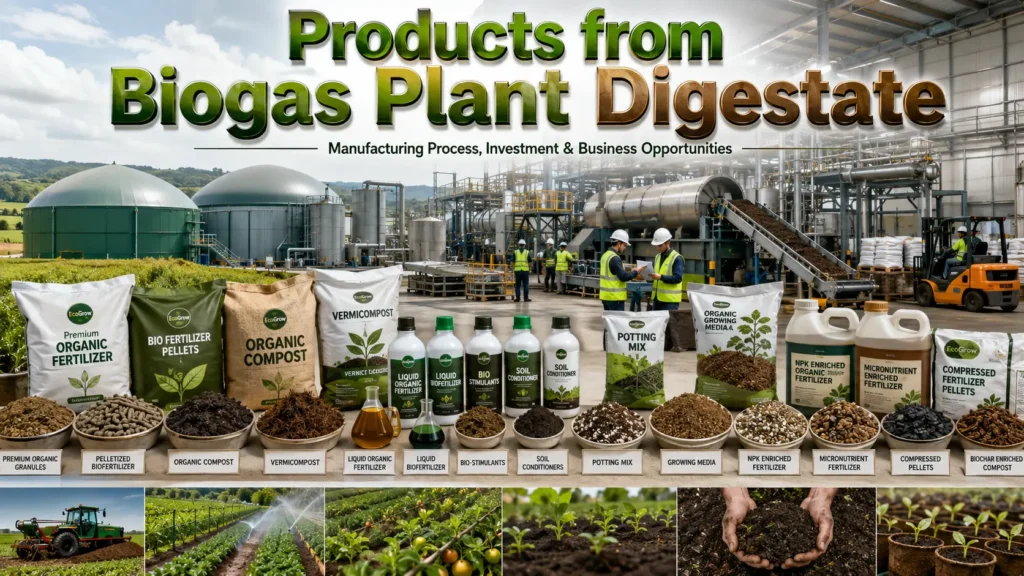
Biogas Digestate Products India has one of the world’s highest installed bases of domestic biogas plants (about 5 million) and commercial biogas plants (hundreds) at dairies, food processors, distilleries and municipal waste sites. The Satat Scheme has also introduced a compressed biogas plant (CBG) and MNRE is supporting fresh biogas capacity. However, in this extensive installed base, the digestate (liquid and solid residue after the energy has been extracted from the waste material as biogas) is not adequately managed and monetized. Most biogas plants just release liquid digestate into the adjacent agricultural land or water bodies and solid digestate piles up in pits, without making any effort to utilise them commercially. The digestate is not waste, but the best liquid organic fertilizer for Indian farmers. While composting and raw manure must undergo weeks of soil mineralisation before the available N can be absorbed by plants, anaerobic digestion breaks down complex organic nitrogen (protein and amino acids) quickly into ammoniacal nitrogen (NH₄-N) and is readily available for plant uptake without requiring weeks to mineralise the soil. Liquid digestates produced by well-managed biogas plants is a complete NPK fertiliser, consisting of 1.5–4% N, 0.8–2% P₂O₅ and 2–4% K₂O on dry matter basis. It has been consistently proven that application of digestate increased crop yields by 15–30% compared to the same mineral fertiliser application, which is probably due to growth hormones and beneficial microorganisms present in digestate. Explore This Book: Handbook on Biogas and Its Applications Top 6 Products from Biogas Digestate 1. Liquid Bio-Fertiliser (Direct Application Grade) This is because the digestate of food, agricultural and dairy waste biogas plants can be filtered at the plant (to remove fibre >1 mm) and quality tested before being sprayed directly onto crops in both drip irrigation or sprinkler irrigation systems. Bulk liquid bio-fertiliser (Rs. per unit) 200–300 litre tankers at Rs. 2,000–5,000 per tonne (Rs. The biogas plant is serving the organic and conventional farmers within 50 km radius. 2. Concentrated Liquid Bio-Fertiliser (Evaporation) The multi-effect evaporators enable digestate to be concentrated to 3-4 times its original concentration (from 1.5 % dry solids to 5-6 % dry solids) and allows for a more economic transport over longer distances for the bio-fertiliser. The digestate is produced in concentrated form (20–25% DS) in Rs. The cost of 20 litre containers is Rs. In urban horticulture and hydroponic crop production, premium prices are obtained for 150 – 300 per litre. A digestate concentration evaporation system: 50–150 lakh. Get Detailed Project Report (DPR): Biotechnology, Enzymes & Organic Farming Guide 3. Separated Fibre Compost (Press Cake) Organic compost material (25–30% DS) is produced by screw press separation of digestate to solid press cake and into liquid fraction, which can be stacked and transported. Granular Organic Compost for bagged retail is prepared by pressing the fibre cake and after drying and bulking agents, the compost is obtained at the retail price of Rs. 5,000–10,000 per tonne. Screw press separator and compost yard: Rs. 30–80 lakh. 4. Nutrient-Rich Irrigation Water (Fertigation) Using filtered digestate in on-farm irrigation systems (such as drip and furrow irrigation) to contracted farmers provides a complete service which can replace 30-50% of mineral fertiliser need. The operators of biogas plants establish long-term agreements with farmer clusters within 5 km of the plant, providing digestate via stationary pipelines or mobile digestate tank systems. 5. Dried Organic Fertiliser Granules Press cake from digesters is further dried (rotary dryer) to less than 10% moisture, and subsequently granulated to yield organic fertiliser granules which are easily spread mechanically and sold in the retail market. For the same, the FCO certified dried digestate granules sell for Rs. Premium organic fertiliser markets: 6-12 tonnes per tonne. Investment in the dryer and granulation line is Rs.: 40–120 lakh. 6. Algae Cultivation Substrate Microalgae (Spirulina/Chlorella) cultivation in raceway ponds or photobioreactor systems can be done with high nutrient liquid digestates diluted with water which serve as a perfect growth medium. Nitrogen and phosphorus (nutrient polishing) removed by algae at digestate water is converted to algal biomass with economic value of Rs. Nutraceutical, animal feed, and biofuel applications: 200-800 per kg. A digestate fed algae pond system: 30–100 lakh. Investment and Market Summary Product Investment (Rs.) Price Key Buyer Liquid Bio-Fertiliser 10–30 lakh Rs. 2,000–5,000/MT Organic/Conv. Farmers Concentrated Bio-Fertiliser 50–150 lakh Rs. 150–300/litre Urban Horticulture Fibre Press Cake Compost 30–80 lakh Rs. 5,000–10,000/MT Organic Farmers, Export Organic Fertiliser Granules 40–120 lakh Rs. 6,000–12,000/MT Premium Organic Market Algae Biomass (on Digestate) 30–100 lakh Rs. 200–800/kg algae Nutraceuticals, Feed Farmer Contracts: Building the Digestate Market Utilisation of digestate is only feasible if reliable farmer buyer relationships are established within the economic transport distance from the biogas plant. A 50 km radius around a large biogas plant contains tens of thousands of farmer fields, which however, need systematic market development, demonstration plots in which digestate crop response is demonstrated and infrastructure for delivery. The most successful digestate utilisation model in India is the biogas plant operators forming partnerships with Farmer Producer Organisation (FPO) where FPO provides farmer market aggregation, the operator supplies digestate at a cost below mineral fertiliser equivalent, and both parties benefit from the partnership. This FPO – biogas partnership model is being actively promoted by NABARD and the State cooperative departments. Related Article: Compressed Biogas Export India Opportunities That Can Earn ₹8 Cr/Year Digital Platforms for Digestate Marketing The agri-tech ecosystem in India is maturing to create online platforms that allow organic fertiliser producers (biogas plant digestate suppliers included) to connect with farmer buyers directly instead of through the traditional distributing chain to enhance farmer and producer margins. DeHaat, Ninjacart, AgriBazaar etc. are developing organic input procurement wings that will link the organic input producers to their farmer network. Aqgromalin (an aquaculture focused agri-platform) collects fish and shrimp farm inputs such as organic fertilisers. They offer the following services for biogas plant digestate producers: nationwide farmer buyer access beyond the geographical reach, digital payment and invoicing system, and quality test by the platform. Agri-tech platforms
Top 8 Products from Waste PET Bottles: Business Ideas & Manufacturing Guide
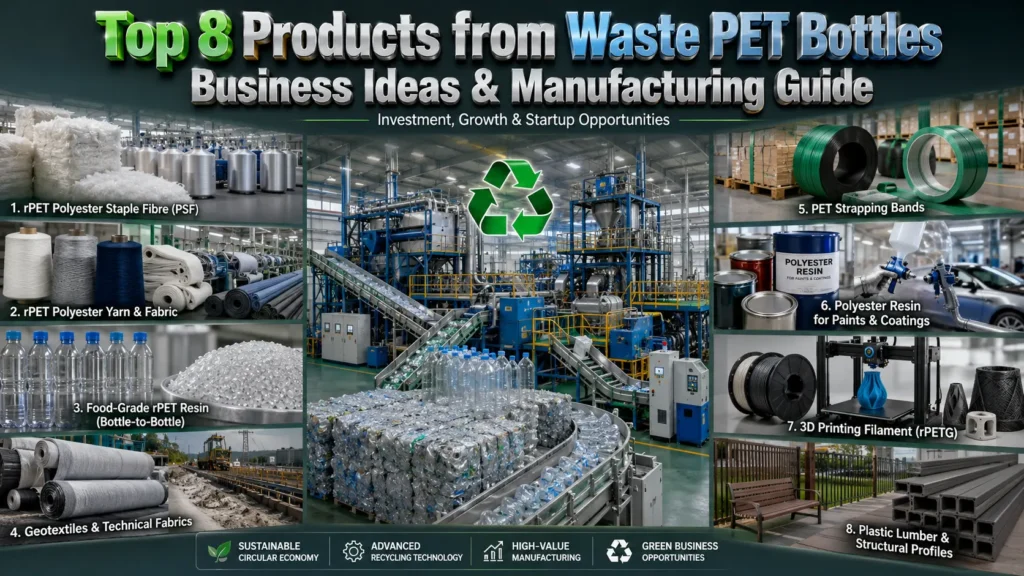
PET bottle recycling business The PET Recycling Opportunity Transformed by EPR Although most commonly recycled plastic in India, polyethylene terephthalate (PET) – clear plastic made for water, soft drink, cooking oil and food packaging – also poses one of the biggest plastic waste concerns for the country. Annually, India generates about 3.5 million tonnes of plastic waste, most of it-60-70%-being collected through an informal network of rag pickers, Kabadiwala networks and small recyclers, and the other 30-40% ending up in landfills, scattered in dumpsites, and often through incinerators. The implementation of EPR – Extended Producer Responsibility – on all plastic packaging producers in the 2022 Plastic Waste Management Amendment Rules has shifted the economics of PET recycling. Now it comes down to the brand owners to prove they collected and recycled the same amount of plastic they added to the market. This has changed the price of recycled PET from a commodity to an EPR compliance tool, with a lower price limit — thus enhancing the investment argument for formal PET recycling. The current trend of entrepreneurs entering this sector has both genuine demand for the product and value of the raw material driven by the regulations. Related Article: Packaged Drinking Water with PET Bottles The PET Recycling Value Chain PET recycling is a chain starting from collection and sorting by colour (clear, green, blue), followed by baling, washing (hot wash lines remove labels, adhesives and contaminants), flaking (shredding into clean PET flakes) and ending with the conversion of PET flakes into end products. The cost of the investment increases significantly at each step downstream — a “baler” costs Rs. 5 lakhs, a hot-wash line Rs. A fibre spinning line Rs. 50 – 150 lakhs. But so do the margins, 3–8 crore. Entrepreneurs may join anywhere and can sell semi-processed material to the downstream processors or can go forward to get more realisation. Top 8 Products from Waste PET Bottles 1. rPET Polyester Staple Fibre (PSF) The most significant end product from PET bottle recycling worldwide is recycled PET polyester staple fibre. After being washed and dried, PET flakes are melted, extruded through spinnerets, drawn, crimped and cut into short fibers (32-64 mm) that are used as pillows, quilts, sleeping bags, stuffed toys and automotive seat cushions. As European and US brands make their recycled fibre content commitments, the demand for exported materials continues to rise.As Europe and the US brands make commitments to recycled fibre content, the demand for exported materials continues to rise. The cost of 10 TPD rPSF plant is Rs. The stake he has in 2–5 crore and the money he generates is Rs. 60,000–90,000 per tonne of output. Explore This Book: The Complete Technology Book on Expanded Plastics, Polyurethane, Polyamide and Polyester Fibres 2. rPET Polyester Yarn and Fabric The high-quality PET flakes are melted and extruded to continuous filament polyester yarn. These high-quality yarns have a range of uses that include fabrics for Apparel, such as active wear, outerwear and linings, Home & Lifestyle, Home & Technical products. As, many globally recognised fashion brands set recycled targets for Polyester, to some extent that you’re more likely to find some of the leading companies making commitments, you could even be looking at, like adidas, H&M, Patagonia and IKEA setting some standards. Indian rPET yarn manufacturers who cater to these brands have established their export business. When making a rPET yarn spinning Plant, the following is required: This makes it a cheaper product than the other 3–8 crore which produces yarn at Rs. 80,000–1,20,000 per tonne. 3. Food-Grade rPET Resin (Bottle-to-Bottle) The most profitable PET recycling process is the bottle-to-bottle process, where rPET (recycled PET resin) is used to make food-grade resins for new beverage bottles. To get the required high intrinsic viscosity for bottle resin, this will need Solid State Polymerisation (SSP) equipment. There is a considerable investment (Rs. The price of food-grade rPET resin is Rs. 10–25 crore. The price of 80,000 to 1,10,000 per tonne is almost comparable to virgin PET resin price, and raw material (PET flakes) price is much lower. Domestic food-grade rPET is a preferred option as beverage brands under EPR pressure look to fill supply chain. 4. Geotextiles and Technical Fabrics Needle-punched geotextile fabrics used in road constructions, slope stabilisation and soil erosion control are made of rPET fibres. The rPET geotextiles have similar performance to virgin polyester but with a price reduction of 20-30%, which is appealing to infrastructure contractors. Specifying geotextile use is increasing the demand, especially from NHAI and state highway departments. The cost of rPET needle-punch geotextile line is Rs. The value is in the range of 1.5–3 crore and directly serves infrastructure supply chains. 5. PET Strapping Bands rPET flakes can be used directly in packaging and logistics industry for PET strapping. The use of PET strapping has been largely superseded by the use of steel strapping because it is lighter, it is rust-proof and it does not break on impact. The price of a PET strapping extrusion line is Rs. The cost of 30–80 lakh and produces strapping at Rs. $60,000-$80,000 per tonne — for large domestic packaging and logistics industry. Get Detailed Project Report (DPR): Plastics, Polymers & Resins Manufacturing Projects 6. Polyester Resin for Paints and Coatings By performing glycolysis on PET waste, bis-hydroxyethyl terephthalate (BHET) and mixed glycol terephthalate oligomers can be used as polyol for polyurethane foams, alkyd resins and polyester resins in paints and coatings. This is a chemical recycling step which needs more advanced chemistry (Rs.). High value-added chemical intermediates having better margin profiles than mechanical recyclables can be generated (1–3 crore). 7. 3D Printing Filament (rPETG) These PET flakes can be extruded and spooled into filament for desktop FDM printers, which are usually made in a high clarity varnish. The niche, high value application fetches Rs. 3,000–6,000 per kg of filament versus Rs. A value multiplier of 40–75x 60-80 per kg of input PET flakes. Small-scale production (Rs. The 20–50 lakh price segment is aimed
Indian Aluminum Ingots: Market Size, Demand, Market Gap, Major Players, Import-Export Trends & SWOT Analysis, Startup Opportunities and Forecast 2026–2033
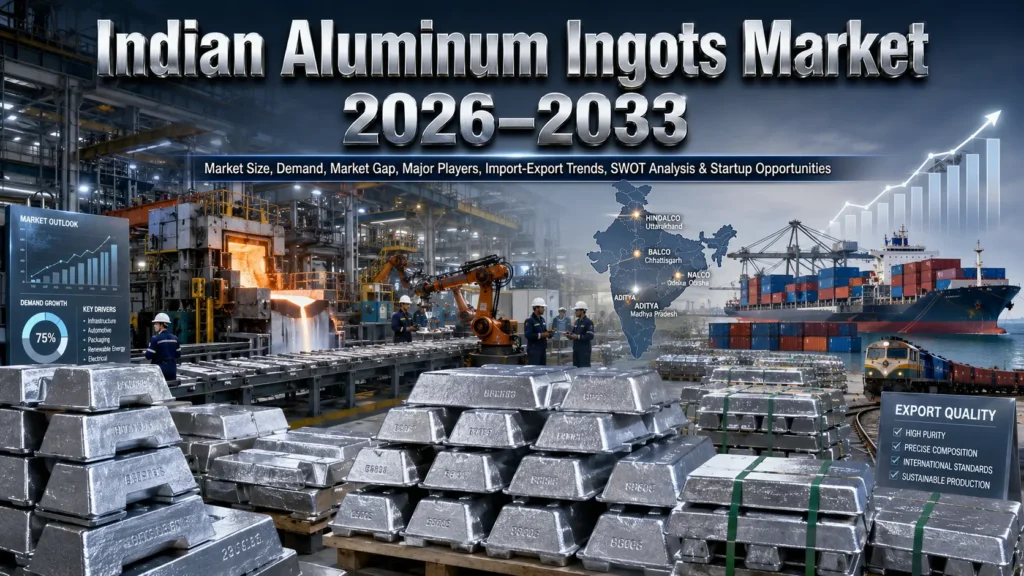
Aluminium Ingots Manufacturing Business MARKET INSIGHT With a market size of USD 15.49 billion, India’s aluminum market is set to be valued at USD 25 billion by 2030 growing at a CAGR of ~7.8%. The primary production capacity stands at 4.1-4.2 million tonnes per annum and the domestic demand remains around 4.5 million tonnes per annum thus giving indications of growing demand outstripping the production growth, primarily driven by the downstream ingot consuming sectors. Executive Overview: Why Aluminum Ingots Demand a Closer Look Aluminum ingots are at the heart of India’s most promising industrial aspirations. Where they go, they are the feedstock that enters automotive die-casting workshops, power cable factories, curtain-wall factories in the construction industry, packaging factories, and now, with growing urgency, they enter the electric vehicle supply chain. Each and every structural aluminium window frame, each and every EV battery housing, each and every ACSR power conductor, and each and every beverage can starts its manufacturing life as a cast ingot. It’s not just an academic pursuit—it’s a business imperative for anyone looking to embark on a manufacturing journey in India’s booming metal landscape. India finds itself in a very peculiar scenario in the aluminium value chain. It is the second largest primary aluminium producer in the world with production contributing nearly 6% of the world production. However, India is also one of the major importers of aluminium products. This dichotomy of high production capability coupled with increased import reliance in certain downstream areas, is an indication of structural gap that can be filled up by an entrepreneurial investor with a well-planned manufacturing unit. Data recorded by Aluminium Association of India shows that the nation has about 3.29 billion tonnes of bauxite reserves, making it one of the world’s largest bauxite reserves. Based on this resource base, the future supply of raw material for domestic aluminum ingot manufacturers is more secure than in most competitors’ economies. Market Size, Growth Trajectory, and Forecast 2026–2033 The India aluminium market was valued at USD 15.49 billion in volume terms of around 6,626 thousand metric tonnes. Independent market forecasts determine that the market will clearly grow to USD 25.03 billion by 2030 at a CAGR of 7.81%, while the volume will exceed 10,200 thousand metric tonnes by 2030. The cumulative growth pattern is also quite attractive over the long forecast period to 2033. All forms of aluminium product—rolled sheet, extrusions, foils and ingots are included. But the base product from which all other aluminum products are derived is aluminum ingots. The global aluminum ingots market size is estimated to be more than USD 154 billion in 2023 and is expected to reach USD 205 billion by 2033 with a CAGR of 3.1%. The Indian share is growing very fast in this global market, fuelled by the combined forces of growth of domestic demand and participation in export markets for the downstream products. The global aluminum ingots market was segmented on the basis of the source of their production into primary ingots and secondary ingots, with primary ingots constituting about 62% share of the market by volume. Secondary ingots – made from recycled aluminium scrap – are expanding even more rapidly at 5.32% CAGR, as the world moves towards the principles of a circular economy and the economics of recycling, which uses 95-98% less energy when compared to primary smelting. Get Detailed Project Report (DPR): Complete Aluminium Manufacturing Guide Key Market Indicators: India Aluminum Ingots Sector Indicator Data Point India Aluminum Market Value (Current) USD 15.49 Billion Projected Market Value (2030) USD 25.03 Billion Market CAGR (2025–2030) ~7.81% Primary Aluminum Production (Annual) 4.1–4.2 Million Tonnes Domestic Consumption ~4.5 Million Tonnes per annum India’s Global Production Share Approx. 6% of World Output Aluminium Ingot Imports (Alloyed, 2024) ~240,000 Tonnes (45% surge YoY) Secondary Aluminum Market CAGR 5.32% (Global); 8.5% India Cast Alloys India’s Aluminum Export Value USD 7.25 Billion (COMTRADE) India’s Aluminum Import Value USD 7.67 Billion (COMTRADE) Demand–Supply Gap: The Core Business Opportunity DEMAND–SUPPLY GAP HIGHLIGHT In India, consumption of primary aluminium was 4.5 million tonnes while production was 4.15 million tonnes. The import of alloyed ingots grew by 45% in one year to 240,000 tonnes. This domestic demand of the unmet part is especially for secondary alloy ingots used in the die casting of automobiles, which are the most obvious sign of investment in the Indian non-ferrous metals market. The demand-supply imbalance in Indian aluminium ingots does not exist in isolation, but rather at two different levels. India has 4.15 million tonnes of production of primary ingots, which is more than the country directly absorbs; a large number of primary ingots and unwrought aluminium are exported. But at the secondary and alloy ingot level, the local supply is so low that it is inadequate. According to Big Mint data, and as reported by Al Circle, in just one month, India imported 38,700 tonnes of aluminium ingots, which is 70% higher than the previous year’s figure. The surge on the imports is almost entirely due to the automotive die-casting business, with particular emphasis on the ADC12 and A356 alloy ingots, which are used for EV battery enclosures, suspension components, engine blocks and transmission housings. Some 1.2 million tonnes of aluminum were used in India for automotive applications in a year, and this demand has been rising drastically because of increased electrification of vehicles. EVs consume as much as 250 kg of aluminum per unit, whereas conventional internal combustion engine vehicles only require 150 kg of aluminum per unit. The demand curve of secondary aluminium alloy ingots is practically vertical in India, where the adoption of electric vehicles is expected to hit 30% mark by 2030. This leaves a textbook disparity between supply and demand for entrepreneurs to deal with: there is a big demand for Indian-made alloy ingots of consistent specification from domestic OEMs die-casters and component manufacturers, but there is not a corresponding growth in secondary smelter capacity in India. The outcome is importing dependence: a signal for the market which
Products from Brewery Spent Grain and Distillery By-Products: Manufacturing Guide and Business Opportunities
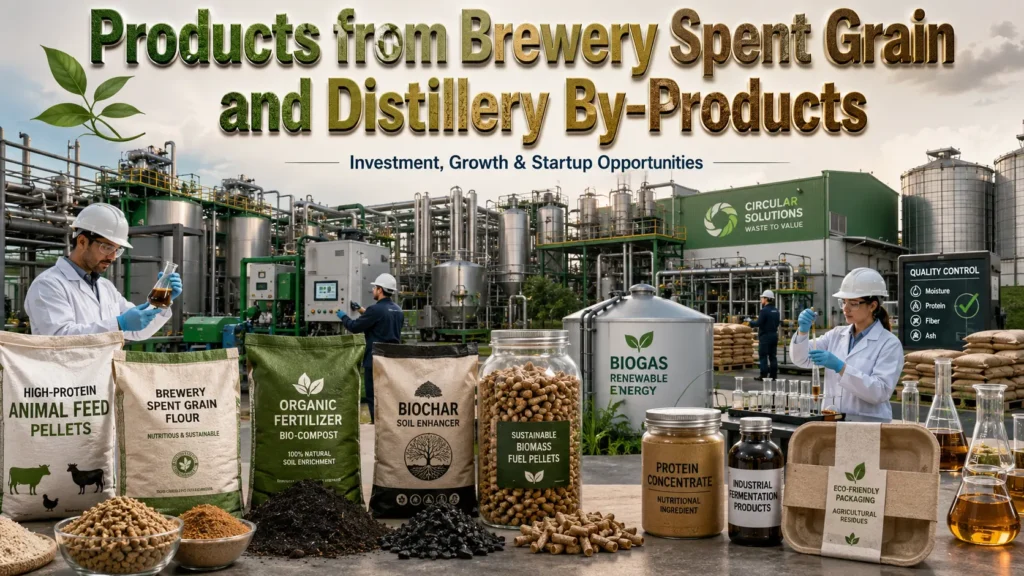
Brewery Spent Grain Business in India Beer and Spirits in India has experienced a tremendous growth in the last 10 years. The Indian market is now the second biggest in the world for whisky and 8–10% of the population are drinking beer every year. This growth equates to increasing amounts of processing waste, such as brewer’s spent grain (BSG) from the brewing industry and distillery spent wash from alcohol production. BSG is the barley malt and adjunct grain used to make the wort that is left over from the brewing processes. About 20kg of wet BSG is produced for every 100 liters of beer produced. The wet BSG is produced by a large Indian brewery (1 lakhs liters per month) and is sold/donated as cattle fodder at Rs. 200 per ton. 1,000–3,000 per ton. BSG is 25–30% protein, 15–25% dietary fiber and has a high content of B vitamins and antioxidants. With the rise in market demand for high fiber, high protein food ingredients like protein bars, sports nutrition, functional foods, food enrichment, there is scope for processing BSG into food grade ingredients which fetches high price of Rs. 100–250 per kg versus Rs. 1- 3 per kg feed as wet cattle feed. The distillery spent wash is a by-product of the alcohol distillation process that contains high levels of BOD (50,000-100,000mg/l) and is rich in potassium, nitrogen and organic compounds useful as crop fertilizers. However, the regulatory pressure (i.e. effluent discharge prohibition) and fertilizer requirement creates a business structure for valorization of spent wash. Top 8 Products from Brewery and Distillery Waste 1. Brewer’s Spent Grain Protein Flour Dried (drum dryer or spray dryer) spent grain after centrifuge and ground to fine flour has a protein content of 25-30% and a fibre content of 15% (dietary fibre). Protein enriched bread, crackers, pasta and health food products use food grade BSG flour. It sells at Rs. 80–150 per kg versus Rs. 1–3 per kg wet. A BSG drying and milling unit will cost Rs. 60–150 lakh. 2. Dried Distillers Grain (DDG) for Animal Feed Dried and pelletised distillery grain residue (corn, sorghum or barley based) is high in protein (26–30%), high in metabolisable energy and high in fat (9–11%) making it a premium animal feed ingredient. DDG can be used in rations for dairy cattle, poultry and swine as a protein-energy source at a competitive price. DDG is a product of large grain-based distilleries and smaller operations can be given the chance to complement their facility with drying and pelletising. Get Detailed Project Report (DPR): Business Plan for Starting Animal Feed Production 3. Spent Wash Potash Fertiliser (Bio-Composted) Distillery spent wash (after multi-effect evaporation) is mixed with agricultural biomass (bagasse, press mud) and forms an organic manure containing 2-3% K₂O, 1.5-2% N and 1% P₂O₅. The Fertiliser Control Order allows spent wash compost as an acceptable organic fertiliser. The cost of the spent wash treatment by composting plant is Rs. It is able to save 50-150 lakh and also addresses the effluent compliance. 4. Biogas from Spent Wash Amongst all industrial effluents, spent wash generates the most energy efficient biogas from high-rate reactors such as UASB and CSTR with 25-35 m³ of gas per m³ of spent wash. The biogas is fired in boilers in place of biomass or coal. A number of large Indian distilleries (United Spirits, Radico Khaitan, Allied Blenders) have installed biogas plants from spent wash. Cost of 1 million litre/day distillery spent wash biogas plant is Rs. 3–8 crore. Get Detailed Insights from This Book: Handbook on Biogas and Its Applications 5. Protein Supplement for Aquaculture Feed Dried and pelletised with balanced amino acid profile, Brewer’s spent grain protein is accepted in tilapia, rohu, catla and shrimp aquafeed at inclusion levels of 10-20%. In the context of the rising production in Andhra Pradesh, West Bengal and Odisha, the demand for plant-based protein feed alternatives to fishmeal is increasing. The price of BSG protein supplement is Rs. 40,000–70,000 per tonne in the aquafeed market. 6. Yeast Extract (from Surplus Brewing Yeast) Protein-rich by-product of the brewing process, surplus brewer’s yeast can be lysed (heated or treated with enzymes) before spray drying into yeast extract, a savory flavour ingredient found in processed soups, sauces, seasoning blends and pet food. The price of yeast extract is Rs. It is imported at present, and costs 200–500 per kg. The cost of a yeast extract production unit is Rs. 1–3 crore. 7. Biosorbent (Spent Grain for Heavy Metal Removal) Chemical processed (acid washed and crosslinked) spent grain is used to make a biosorption material that is efficient in the removal of heavy metals (lead, cadmium, chromium) from industrial effluents. A specialty, niche chemical application for the ETP industry. The cost of a specialty biosorption preparation unit is Rs. 40–100 lakh. 8. Compostable Packaging Material Dried and compressed BSG fibre with starch binders, can be used to create rigid compostable packaging trays, plates and containers. These products are in competition with bagasse and wheat bran moulded packaging products — the single-use plastic alternative market. The cost of a BSG moulded packaging unit is Rs. 80–200 lakh. Discover business ideas that actually make money Investment and Market Summary Product Investment (Rs.) Price Key Buyer BSG Protein Flour (Food Grade) 60–150 lakh Rs. 80–150/kg Health Food, Bakeries DDG Animal Feed Pellets 40–100 lakh Rs. 25–40/kg Dairy, Poultry, Aquafeed Spent Wash Compost 50–150 lakh Rs. 4,000–8,000/MT Organic Farmers Biogas from Spent Wash 3–8 crore Fuel Cost Saving Self-Consumption, OMC Yeast Extract 1–3 crore Rs. 200–500/kg Food Flavour, Pet Food Related Article: Strategic Role of Zinc and Copper in Animal Nutrition: Why Every Feed Formulation Must Include Trace Elements Raw Material Contracts with Breweries and Distilleries Formal contracts must be signed with breweries and distilleries to assure supply of BSG and spent wash including agreed delivery dates, quality data (moisture, protein content), and price. In addition, large breweries are willing to outsource the entire BSG logistics to a processor, even if they have to pay
Products from Rice Husk and Rice Husk Ash: Business Ideas, Manufacturing Process, and Project Opportunities
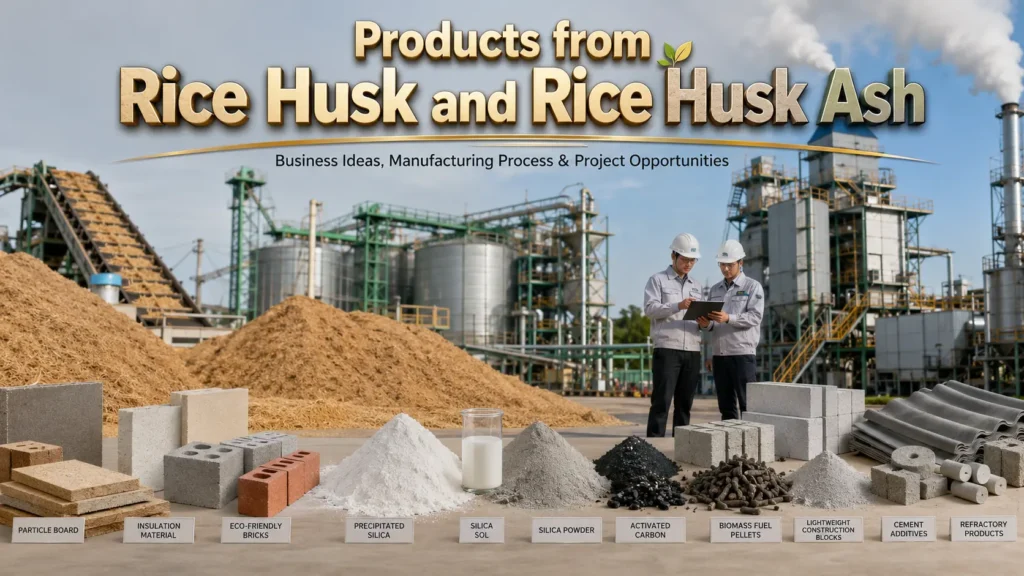
Rice Husk Products Business Ideas Why Rice Husk Is One of India’s Most Undervalued Industrial Raw Materials The one thing that most business people fail to consider when they start a business based on agricultural waste is that the raw materials are nearly free. Rice husk, the sheathing of paddy is just such an opportunity. India is the second largest rice producer, producing around 12 million tonnes of rice husk as a by-product of the milling process every year. Most of this husk was used as fuel for boiler generation of steam in rice mills until recently, but was accompanied by particulate pollution. What entrepreneurs are finding is that rice husk is not only a fuel, but also a chemical feedstock, construction material, and an industrial input that is much more valuable than its fuel value. Rice husk is about 20% silica in a highly amorphous and reactive form. Ash from the controlled combustion known as Rice Husk Ash (RHA) is about 85-92% amorphous silica. This silica is used as a raw material in the production of precipitated silica, sodium silicate, activated carbon, cement additives and refractory materials. The business is real and proven and can be done by the MSME entrepreneurs with an understanding of the processing. Get Detailed Insights from This Book: Manufacture of Value Added Products from Rice Husk (Hull) and Rice Husk Ash (RHA) Top 10 Products from Rice Husk and Rice Husk Ash 1. Precipitated Silica Precipitated silica is produced by reacting RHA with caustic soda to produce sodium silicate solution, and then precipitating silica by acidification with sulphuric acid. The white powder produced is used as a rubber tyre reinforcement, a flow aid in toothpaste, an anti-caking agent in animal feed and a tablet excipient in pharmaceuticals. India is now importing so many materials from China and Germany. The cost of a 5 TPD unit is Rs. The investment requirement for this is about 80 lakh to 150 lakh and has the potential to create Rs. The annual net profit lies in the range of 40-60 lakh at market price of Rs. 35,000–70,000 per tonne depending on grade. 2. Sodium Silicate (Water Glass) Sodium silicate can be obtained by melting RHA with soda ash at high temperature or by dissolving RHA in caustic soda at high pressure. It is used for making detergents, paper adhesives, foundry core binding, textile processing and water treatment. There is a big domestic market in India. In the case of a 10 TPD plant, the investment costs are: 30–80 lakh. It is easy to process and there is a reliable industrial buyer base for the product. 3. Activated Carbon Rice husk activated carbon is obtained when the rice husks are carbonised at 500-700°C and then activated with steam or CO₂ at 800-950°C. Surface areas of 800-1200 m2/g are used for water purification, air filtration, decolourisation in pharmaceuticals, food processing and gold recovery. The cost of a 3 TPD unit is around Rs. Investment required is 60 to 120 lakh and the revenues earned are Rs. Depending on application grade between 50000 and 1,50,000 per tonne. 4. Rice Husk Particle Board Particle board is made from rice husk, Urea Formaldehyde or isocyanate binders and is hot pressed into panels that are used for furniture, partition and low-cost housing. The boards have termite resistance and moisture stability. The cost of a 5,000 m³/year plant is Rs. 1.5–3 crore. Clients are furniture makers, government housing schemes, interior fit out companies etc. Get Detailed Project Report (DPR): Rice Husk, Rice Hull, Rice Husk Ash (Agricultural Waste) Based Projects 5. Rice Husk Briquettes and Pellets The biomass fuel of dense quality with calorific value of 3200 – 3600 kcal/kg is produced by compressing the rice husks under high pressure, without using binders. These briquettes are used in industrial boilers of the food processing, textile, ceramic and brick industries as an alternative to coal. Investment: Rs. 25–60 lakh. Renewable energy requirements around the world are increasing, and so are European and South Korean demands on biomass fuel exports. 6. RHA as Cement Pozzolan The rice husk ash contains a large amount of amorphous silica ash, which has excellent pozzolanic activity, when the rice husk is burned at 600–700°C. RHA can be used as a substitute for 10 – 25% of the Portland cement used in concrete, enhancing durability and reducing carbon footprint. As per contract, RHA is supplied to cement companies at the rate of for 2,000-5,000 per tonne, only investment for collection and quality control is required. It is a low-cost product with 10 to 25 lakh customers and low processing cost. 7. Refractory Products High-silica RHA used in the refractory bricks and castable for industrial furnace, which has high resistance to temperature above 1,600℃, is suitable for steel ladles, foundry furnaces, ceramic kilns, etc. The niche, higher margin product is well-balanced with an industrial buyer base. The price of a small refractory unit begins at Rs. 50–100 lakh. 8. Oxalic Acid Rice husk cellulose is treated with alkaline water at high temperature and pressure to produce oxalic acid which is further acidified to produce oxalic acid. Currently it is imported for use in the textile industry, in leather manufacturing and in the synthesis of pharmaceuticals as well as in metal surfaces. The cost of a 2 TPD unit is Rs. 40–80 lakh. RHA is a cost competitive alternative to imported production. 9. Silicon Metal (Advanced Application) High-temperature carbothermic reduction is being used commercially to provide a source of high purity silicon for electronic and solar cell applications for RHA. India and abroad there are several pilot and commercial plants. This requires a lot of capital (Rs.). The selling price of silicon metal is Rs. 10 lakh – 50 lakhs (10 – 50 crore). The rice husk has the highest value-addition of Rs 1.5–3 lakh per tonne. Discover business ideas that actually make money 10. Cellulosic Ethanol (2G Biofuel) Rice husk is rich in cellulose (35-40%) and hemicellulose (25-30%) which can be fermented
How to Start a Crumb Rubber Powder Plant: ₹1.5 Crore Investment, ₹6 Crore Revenue
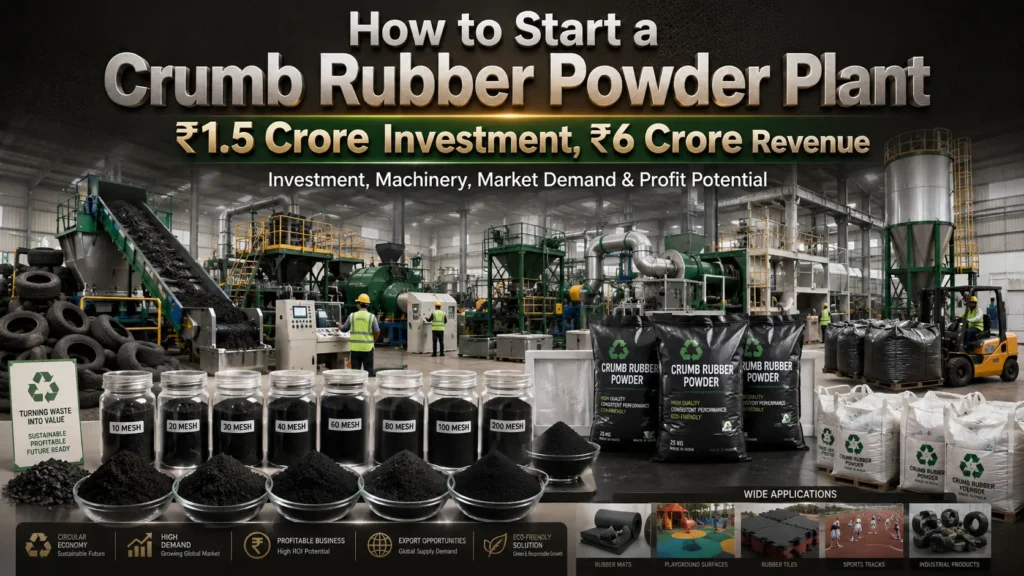
Crumb Rubber Powder Plant in India A Business Idea the Recycling Economy Is Crying Out For In the field of environmental-friendly manufacturing, a crumb rubber powder plant is one of the most missed out business ideas in India for a simple reason, waste tyres are everywhere and the demand for manufactured rubber granules is increasing rapidly. Entrepreneurs who know this are entering a business with solid profit margins, abundant raw material supplies and government tailwinds rolling down the road ahead. Not a niche opportunity — it’s a real industrial play with a real scalability. The Ministry of Environment, Forest and Climate Change numbers show that India produces more than 1.1 million metric tonnes of end-of-life tyres every year. The majority of this rubber is deposited in uncontrolled dump sites, thereby not only posing a threat to the environment, but also creating a raw material that could not be used. This waste is transformed at a crumb rubber powder plant into a high-value industrial input: used in roads, sports surface, automotive component and construction material. The economic arguments are strong. The total project investment is around ₹1.5 crores and a well-managed plant can yield an annual revenue of anywhere between ₹5–6 crore, which means first-generation entrepreneurs and MSME investors will get a handsome return on their investment. Get Detailed Insights from This Book: The Complete Book on Rubber Processing and Compounding Technology Why This Sector Is Growing Fast The crumb rubber industry is a dynamic area of business poised at the crossroads of two trends: the circular economy and the wave of infrastructure expansion. An increasing number of industries are experiencing a surge in demand for crumb rubber powder (also known as recycled rubber granules). Road construction accounts for the greatest use. Rubberised bitumen (with crumb rubber as a modifier) provides an extended service life, improved skid resistance and reduced maintenance costs for pavements. The National Highways Authority of India (NHAI) has issued orders for several NH projects to use rubberised bitumen, taking the demands away from the processors. On the other hand, sports infrastructure, which includes artificial turf, running tracks, playgrounds etc., is booming in tier-2 and tier-3 cities. A lot of crumb rubber infill is needed for each installation. Demand is also on the rise for exports, especially to South Asia and Middle East, where there is not enough tyre recycling facility. So entrepreneurs who are coming in to this industry are not only going to benefit from domestic consumption; they are investing in export revenues as well. The raw material side is also very good. The amount of end-of-life tyres is large, low cost and increasing. Tyres are produced every day by steel mills, transportation companies, logistics companies and municipalities. Since it is an expense to dispose of, many suppliers would be willing to sell scrap tyres at close to zero cost. It helps to lower input costs and maintain solid profit margins, even during recessions. Government Policies and Incentives Supporting This Business Extended Producer Responsibility (EPR) and Waste Tyre Regulations The Central Pollution Control Board (CPCB) has issued notification of EPR rules for Hazardous and Other Wastes Management Rules relating to waste tyres. Tyres must be passed through registered tyre recyclers and processors under these regulations. As a result, tyre Original Equipment Manufacturers (OEMs) are actively looking for authorized crumb rubber processors. For new plants, it is the formalisation of raw material linkages right from the beginning, which gives them a major competitive edge over unorganised players. MSME Credit and Subsidy Schemes MSME Ministry has launched a collateral-free loan facility for MSMEs for manufacturing projects with the Credit Guarantee Trust for Micro and Small Enterprises (CGTMSE) scheme, which offers loans of up to ₹2 crore. The scheme reduces the financing costs of an investment project worth ₹1.5 crore to a great extent. Moreover, the Government offers capital subsidy of 15-35% under its Prime Minister’s Employment Generation Programme (PMEGP) scheme for manufacturing MSME based on the category and geographical area. These should be investigated by new business owners before they approach the banks directly. Make in India (DPIIT) also facilitates green manufacturing projects by having single window clearance systems and facilitation cells in most states. Some of the state governments such as Rajasthan, Gujarat and Maharashtra provide extra subsidy on land cost and rebate on power tariff for recycling units and green manufacturing units. Environmental Clearance and Registration Crumb rubber plants come under the category of Orange Environmental Regulation and are to be gotten proper Consent to Establish (CTE) and Consent to Operate (CTO) from the State Pollution Control Board. The registration procedure is not complicated but is streamlined for small units. Planning for environmental clearances for a new plant takes 60-90 days, so this should be added to the project schedule. Get Detailed Project Report (DPR): Crumb Rubber Powder from Waste Tyre Manufacturing: A Promising Venture for Startups Multiple Business Ideas Within the Crumb Rubber Powder Sector 1. Standard Crumb Rubber Powder Manufacturing Unit The entry point is the most direct – a standard crumb rubber powder making plant, which processes the old tyres into granules with different mesh sizes such as 10-mesh chips, 40-mesh granules, 80-mesh powder etc. Ambient temperature processing mechanical shredding line is used in the unit. Main equipment refers to a primary shredder, secondary granulator, cryogenic or wire separator, and a vibrating sieve classifier. An entrepreneur can have a plant installed for commissioning which will have a capacity of 5–8 tonne per day for a ₹1.5 crore investment. The key is product diversification, however, and selling 10-40 mesh granules to sports surface installers, 40-60 mesh to automotive sealing product manufacturers and fine 60-80 mesh to paint and coating manufacturers. The combination of these product lines optimises the revenue per tonne and lessens the reliance on a single customer segment. 2. Cryogenic Crumb Rubber Processing for Premium Applications The tyres are frozen in a cryogenic tank with liquid nitrogen prior to size reduction, which results in a cleaner, more uniform crumb rubber particle
How to Start a Plastic Recycling Plant in India: Cost, Profit, Machinery & Licenses
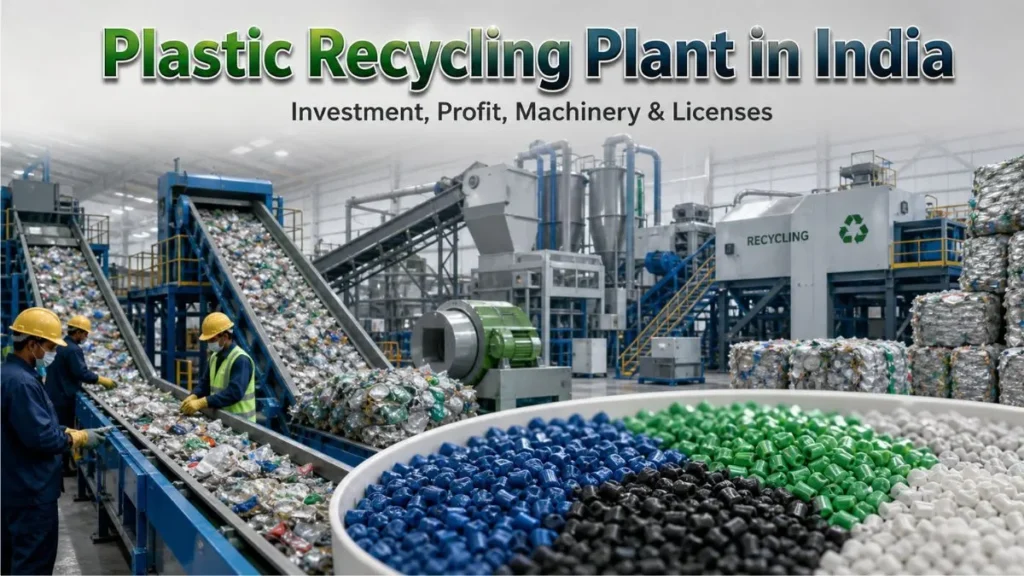
A Profitable Industry Hidden in Waste Plastic recycling plant in India has become one of the most viable and future oriented manufacturing ventures. Millions of tonnes of plastic waste are generated in India annually, yet much of it continues to go unprocessed or informally managed. Meanwhile, recycled plastic is now a legal requirement of the industries because of the environmental policies, such as Extended Producer Responsibility (EPR). This discrepancy between the production of waste and industrial need has provided a good business opportunity. Entrepreneurs no more deal with the garbage: they are constructing lucrative manufacturing plants that transform plastic scrap into industrial raw material. A properly designed recycling facility can bring about constant revenue every month and growth over time with moderate investment. Download the Full Guide: Medical, Municipal and Plastic Waste Management Handbook Why Plastic Recycling Is Growing Rapidly in India There are three key reasons as to why the plastic recycling demand in India is on the rise. To begin with, the consumption of plastics is increasing annually because of the growth of the packaging, e-commerce, and FMCG. Second, recycling facilities are not well developed. Third, companies are being compelled by government regulations to use recycled plastic. The important drivers are: Stringent EPR (Extended Producer Responsibility) policies. Rising demands on rPET, rHDPE and rPP in industries. Lack of qualified recycling facilities. Growing export of recycled granules. Due to these reasons, recycled plastic is now a stable industrial good and not an act of waste management. Types of Plastic Recycling Plants You Can Start The first thing to do before initiating it is the selection of the appropriate kind of plastic recycling business. All the categories vary in terms of machinery requirements, level of investment and profit margins. The most popular option is PET recycling as it transforms bottles into flakes or granules that can be utilized in the textile and packaging industries. Recycling of HDPE is also applied to the recycling of products such as pipes, containers and industrial packaging. Automobile parts and molded plastic products are recycled through PP. The types each have their benefits, although the majority of small entrepreneurs choose PET or HDPE due to the stable demand and simplified operations. Get Detailed Project Report (DPR): Plastic Waste Recycling Plant Investment Required to Start the Business The investment is based on the size of production and level of automation. About 500 kg per day is a small recycling plant that needs ₹25 lakh to ₹40 lakh. The medium-scale plant may cost ₹70 lakh to 1.1 crore. The key items of cost are machinery, infrastructure, working capital, and compliance establishment. A great number of entrepreneurs begin by leasing industrial sheds to take the edge off the start-up cost. Machinery and Production Process The process of a plastic recycling plant has a basic yet organized production system. It starts with the collection and sorting of plastic waste to eliminate undesired materials. The plastic is sorted and then the granulator machine is used to shred the plastic into small pieces. Then the substance is thoroughly washed to get rid of dirt, labels and impurities. After cleaning it is dried with mechanical or thermal dryers. The plastic is then melted using an extruder machine to form long strands of the dry plastic. Such strands are sliced into minute pellets, and they are the end product. Main machinery used in a recycling plant includes: Shredder or granulator Washing line (float sink tank and friction washer) Dryer system Extruder machine Pelletizer unit This arrangement is the main component of the whole recycling process. Raw Material Supply Strategy One of the most significant aspects of this business is raw material. No efficient production is possible without a constant supply of plastic waste. Plastic waste is generally obtained through: City garbage collection systems. Scrap traders (kabadi networks) Industrial plastic waste FMCG packaging waste. EPR-based corporate contracts Among them, EPR agreements are the most consistent as the companies are legally obliged to guarantee recycling goals. This establishes a relationship in the long run between recyclers and brands in terms of supply. Build a profitable business with the right idea Licenses and Legal Requirements. The establishment of a plastic recycling plant must have appropriate legal approvals in order to be in line with environmental and industrial regulations. The important registrations are MSME Udyam registration, GST registration, factory license and pollution control board clearance. Also, you will need to be registered as a plastic waste processor under the EPR regulations when you intend to deal with big corporate clients. Approval may require a few weeks or few months based on the state and quality of the documentation. Profitability and Business Potential Recycling of plastics is a good manufacturing enterprise due to the steady demand and steady prices. Prices of recycled plastic granules range between 40 and 90 per kg, based on the quality and type. A small plant can earn monthly between 10 lakh and 7 lakh rupees when running at 60 percent capacity and with full capacity, the plant can earn much more. The average profit margins are 18-25 percent. Profitability is further enhanced when it is added to EPR credit income. When the business is maintained effectively, it tends to gain back initial investment in 2.5 to 4 years. Government Support and Financial Assistance Indian government encourages recycling companies in its sustainability initiatives. There are a number of schemes that relieve entrepreneurs of financial load. The major support systems are PMEGP subsidies, CGTMSE collateral-free loans, and MUDRA financing of small units. Most states also have other incentives such as electricity subsidies, tax incentives and industrial land support to green industries. With such schemes, first time entrepreneurs are now able to venture into the recycling business with ease. Related Article: How to Start Pulp-Based Beverage Packaging Unit in India (Plastic Ban Opportunity) Role of NPCS in Setting Up the Plant NIIR Project Consultancy Services (NPCS) is significant to assist entrepreneurs in establishing plastic recycling facilities in India. It is a reputable consultancy firm that
The Business of Biomedical Waste Recycling: Business Opportunities in Waste Management
As the world witnesses an increase in healthcare services and medical consumption, the generation of biomedical waste is surging at an alarming rate. This growth brings with it not just environmental concerns, but also immense business potential. Among all emerging waste-related ventures, biomedical waste recycling stands out as one of the most impactful and scalable opportunities today. Biomedical waste includes items like used syringes, gloves, surgical instruments, soiled dressings, body fluids, pharmaceutical remains, and more. Traditionally incinerated or sent to landfills, a growing part of this waste is now being scientifically recycled to recover plastics, metals, and energy. In 2025, the global biomedical waste management market is expected to cross USD 15 billion, and nations worldwide are tightening regulations to ensure sustainable handling. These regulatory pushes and technological innovations are creating a favorable business ecosystem. Entrepreneurs looking for a meaningful, eco-conscious, and high-demand venture should consider entering the field of biomedical waste recycling, where both profitability and public health meet. Why Biomedical Waste Recycling is an Urgent and Profitable Venture The growing awareness about health safety, the rise of multi-specialty hospitals, and increased biomedical consumption are accelerating waste generation. This makes biomedical waste recycling not just important, but also a smart, future-proof business idea that supports environmental and economic sustainability. Read our Books Here: Products From Waste, Automobile Surge in Biomedical Waste Generation In 2025, developing countries like India, Brazil, and Nigeria are witnessing massive growth in public and private healthcare facilities. Each of these institutions generates tons of medical waste daily. For instance, India alone produces over 800 tons of biomedical waste every day, a number expected to rise with expanding rural health missions and urban hospitals. Much of this waste, including plastic syringes, blood bags, surgical masks, and PPE kits, is non-infectious after sterilization and can be recycled. This ongoing surge proves that biomedical waste recycling is a necessity and a growing opportunity. Visit this Page for More Information: Start a Business in Waste Management and Recycling Sector Regulatory Push and Mandatory Compliance Governments across the globe are making it mandatory for hospitals and labs to dispose of their waste responsibly. In India, the Biomedical Waste Management Rules, 2016 (updated in 2019), require all healthcare facilities to segregate, treat, and document waste management processes. Non-compliance can lead to shutdowns or fines. This has forced thousands of institutions to partner with recycling service providers. Thus, businesses that offer certified biomedical waste recycling services are seeing increased demand, making it a reliable sector with built-in clientele and legal backing. Related Business Plan: Waste Management and Recycling, Industrial Waste Management Types of Recyclable Biomedical Waste Not all biomedical waste is infectious. A large volume includes items that, once sterilized, can be repurposed. This includes polypropylene plastic from syringes, PVC from IV tubes, stainless steel from surgical instruments, and even cardboard packaging. With proper segregation and treatment, recycling units can extract valuable materials that can be used in making plastic granules, energy pellets, or even low-grade industrial products. The ability to recover and repurpose such materials is a key reason why biomedical waste recycling has become a favored business model in the waste management sector. Read Similar Articles: WASTE MANAGEMENT AND RECYCLING Business Model and Infrastructure Requirements To start a biomedical waste recycling business, you need to set up a treatment facility that includes autoclaving or microwave sterilization units, shredders, plastic recycling machinery, and secured transport systems. A medium-scale setup can be launched with an investment of ?50 lakh to ?1 crore, depending on capacity. The plant must be compliant with pollution control board norms and obtain licenses from municipal health authorities. You can choose to specialize in specific waste streams like plastic waste or run a comprehensive recycling facility handling multiple categories. Partnering with hospitals, clinics, diagnostics labs, and biomedical waste aggregators is essential to ensure a steady supply chain. Eco-Friendly Business with High ROI Today’s consumers and corporations prefer to associate with environmentally responsible brands. Investing in biomedical waste recycling not only brings profit but also gives your brand a socially responsible image. Many governments and NGOs support green projects, providing subsidies and tax benefits for businesses promoting environmental sustainability. By processing up to 5–10 tons of waste daily, businesses can generate consistent monthly revenue through collection charges, material resale, and government tenders. With operational costs being relatively stable and the demand constantly rising, this venture provides a strong return on investment. Click here to send your queries/Contact Us Opportunities in Rural and Urban Settings Though urban areas have better access to recycling facilities, rural and semi-urban healthcare centers often lack proper waste disposal systems. Entrepreneurs can explore mobile biomedical waste recycling services or set up collection hubs that transport waste to central processing units. Collaborations with local bodies, NGOs, and government-run hospitals can open up opportunities beyond metropolitan cities. Expanding into Tier 2 and Tier 3 regions ensures a broader impact and less competition, giving early movers a market advantage. Related Feasibility Study Reports: Biomedical Waste Recycling Industry Innovations and Future of Biomedical Waste Recycling The future of biomedical waste recycling lies in automation and advanced waste-to-energy solutions. Technologies like pyrolysis, plasma gasification, and chemical sterilization are being explored to convert medical waste into energy or usable by-products. Startups are also using AI-powered segregation tools to sort waste more efficiently. In 2025 and beyond, innovations will make recycling faster, safer, and more cost-effective. Entrepreneurs who invest in tech-driven waste solutions will find themselves at the forefront of a critical industry that merges technology, sustainability, and healthcare. https://www.entrepreneurindia.co/project-identification. Click here to send your queries/Contact Us Reasons for Buying NIIR Report: Our research report helps you get a detailed picture of the industry by providing an overview of the industry along with the market structure and classification. Our report provides market analysis covering major growth driving factors for the industry, the latest market trends and the regulatory framework of the industry. Our Report provides an analysis and in-depth financial comparison of major Players / Competitors. Our Report provides indispensable
How to start Tyre Recycling Business?
The Tyre Recycling Business has emerged as one of the most promising and sustainable industrial opportunities in today’s environmentally conscious world. With the automotive sector expanding rapidly and millions of vehicles hitting the roads annually, the volume of discarded tyres is growing at an alarming rate. These non-biodegradable waste materials pose a serious threat to landfills and ecosystems. This makes Tyre Recycling Business not only a highly profitable initiative but also a much-needed environmental solution. Tyre recycling converts waste tyres into usable products like crumb rubber, rubber powder, pyrolysis oil, carbon black, and steel wire. These materials find application in multiple industries, such as construction, road paving, sports surfaces, footwear, and even renewable energy generation. With the Indian government pushing for sustainable development and waste-to-wealth initiatives under the Swachh Bharat and Atmanirbhar Bharat missions, the Tyre Recycling Business is gaining momentum as a viable MSME and startup idea. Visit this Page for More Information: Start a Business in Waste Management and Recycling Sector Scope and Potential of the Tyre Recycling Industry The global tyre recycling market is estimated to surpass USD 9.5 billion by 2030, growing at a CAGR of over 5.3%. In India alone, more than 300 million tyres are discarded every year, and only a fraction of them are processed scientifically. The Tyre Recycling Business taps into this massive volume of waste to produce high-demand raw materials like: Crumb Rubber for roads and rubberized products Rubber Powder for mats, tiles, and synthetic turf Pyrolysis Oil used as industrial fuel Carbon Black reused in plastics and inks Steel Wire melted and resold to foundries By reducing dependency on virgin materials and petroleum derivatives, tyre recycling also contributes toward a circular economy. Related Business Plan: Waste Management and Recycling, Industrial Waste Management Raw Materials and Collection Sources The primary input for the Tyre Recycling Business is used or scrap tyres, including: Passenger car tyres Truck and bus tyres Two-wheeler tyres Aircraft tyres (in some advanced setups) Manufacturing scrap from tyre companies Read Similar Articles: WASTE MANAGEMENT AND RECYCLING These can be sourced through: Municipal solid waste collection units Local garages and automobile service stations Government auctions Bulk tie-ups with logistics and transport fleets Proper segregation and pre-processing are essential for efficient recycling and maximum yield. Click here to send your queries/Contact Us Tyre Recycling Methods There are mainly two popular methods used in the Tyre Recycling Business: Mechanical Recycling (Crumb Rubber Production) Tyres are shredded using crushers Steel and fiber are separated The rubber is ground into various mesh sizes (10–120 mesh) Used for roads, tracks, mats, and asphalt modification Pyrolysis Recycling Tyres are heated in an oxygen-free reactor at 300–450°C Products include pyrolysis oil (fuel), carbon black, and steel wire This method offers high-value outputs and energy recovery Advanced technologies also include devulcanization and chemical recycling, though they require higher investment. Related Feasibility Study Reports: Crumb Rubber Powder From Waste Tyres Machinery Required for Tyre Recycling Business To establish a Tyre Recycling Business, the following machinery and equipment are typically needed: Tyre cutting machine Shredding unit Granulator or crusher Magnetic separator (for steel) Vibro screen Pyrolysis reactor (for pyrolysis-based units) Oil-condensing and storage tanks Dust collector and pollution control unit The average cost of setting up a crumb rubber unit ranges from ?30 lakh to ?1 crore, depending on the capacity and automation level. Pyrolysis units may need ?50 lakh to ?2 crore in investment. Read our Books Here: Waste Management, Waste Disposal And Recycling Industry Legal and Environmental Compliance Due to the hazardous nature of tyre waste and emissions during recycling, proper licensing and approvals are essential: Consent from State Pollution Control Board (SPCB) Factory License and MSME Registration Import License (if dealing in imported tyres) Fire and safety compliance certificate Environment Impact Assessment (for large units) GST Registration Additionally, the unit must comply with MoEF&CC norms, maintain a proper emissions control system, and safely manage any residual waste. Market Demand and Buyers Products from the Tyre Recycling Business are in high demand from various industries: Pyrolysis Oil – used as a substitute for furnace oil in boilers Crumb Rubber – utilized in road surfacing, tiles, and sports arenas Rubber Powder – preferred by footwear, rubber, and plastic manufacturers Carbon Black – repurposed in pigment and filler industries Steel Wire – resold to foundries and scrap metal dealers You can also supply directly to: PWD and road contractors Construction material manufacturers Paint and ink companies Fuel-based industries (brick kilns, chemical units) Profitability and ROI Analysis The Tyre Recycling Business offers excellent profitability with proper process and market linkage. Here’s an approximate analysis for a small unit processing 2 tons/day: Monthly Revenue: ?8–?12 lakhs Monthly Operating Costs: ?4–?6 lakhs Net Profit: ?3–?5 lakhs ROI Period: 12–18 months With the government offering incentives under the Startup India, MSME, and Green Industry schemes, capital subsidies and tax exemptions are also available in some states. Challenges and Solutions Common challenges: Unorganized sourcing of raw tyres Pollution and odor control in pyrolysis Product quality consistency Regulatory approvals Solutions: Build a strong sourcing network locally Invest in emission-control systems Use automated quality monitoring tools Stay updated with environmental regulations and circular economy trends Conclusion The Tyre Recycling Business is a future-ready opportunity that blends profitability with sustainability. As awareness about environmental hazards and resource conservation increases, tyre recycling will play a critical role in waste management and material reuse. Entrepreneurs who invest wisely in the right technology, regulatory compliance, and market linkages can create a scalable and impactful business model. Select and Choose the Right Business Startup for You Niir Project Consultancy Services (NPCS) has prepared project report on – Tyre Recycling Plant, Detailed Project Report, Profile, Business Plan, Industry Trends, Market Research, Survey, Manufacturing Process, Machinery, Raw Materials, Feasibility Study, Investment Opportunities, Cost and Revenue, Plant Economics. The project report provided by NPCS gives a detailed market review. The report analyses the market confirms the availability of various necessities such as plant & machinery, raw materials and tells about the forecasting financial