
How to Start Manufacturing Business of Biodegradable Plastics and Polymers
The business of biodegradable plastics and polymers is emerging as one of the most promising industries today. As environmental concerns grow and governments push for sustainable alternatives to traditional plastics, biodegradable plastics offer an eco-friendly solution that is reshaping the materials market worldwide. Why Choose the Business of Biodegradable Plastics and Polymers? Biodegradable plastics and polymers break down naturally over time, reducing pollution and dependence on fossil fuels. Consumers and industries alike are demanding greener options, which creates huge market potential for entrepreneurs. According to industry reports, the global biodegradable plastics market is expected to grow at over 20% annually over the next several years, reflecting surging demand across sectors like packaging, agriculture, and healthcare. In India, the market is especially vibrant, projected to expand at a compound annual growth rate (CAGR) of over 22%, driven by increasing environmental awareness and government policies supporting sustainable materials. Setting Up Your Manufacturing Plant Starting a manufacturing unit for biodegradable plastics and polymers requires investment in specific machinery and equipment, including: Compounding machines to blend raw materials Blow molding and extrusion machines for shaping products Recycling and processing units Auxiliary tools like conveyor belts and cooling tanks You will also need access to raw materials such as corn starch, sugarcane bagasse, and other biomass feedstocks, along with chemicals like resin and caustic soda. Visit this Page for More Information: Start a Business in Biodegradable Products Industry Navigating Regulations and Compliance Manufacturers in this sector must comply with environmental and safety regulations. In the U.S., for example, the Toxic Substances Control Act (TSCA) requires companies to notify the Environmental Protection Agency (EPA) when producing or importing large quantities of biodegradable plastics. Good Manufacturing Practices (GMP) and annual chemical reporting are also mandatory. Understanding and adhering to these regulations is critical to operating smoothly and gaining consumer trust. Related Business Plan: Biodegradable Products Benefits of Investing in Biodegradable Plastics and Polymers Launching a business of biodegradable plastics and polymers offers multiple advantages: Sustainability: You contribute to reducing plastic pollution. Cost-Effectiveness: Bioplastics often require less energy to produce. Market Growth: Increasing consumer and industrial demand opens new sales opportunities. Versatility: Products can serve in packaging, agriculture, medical devices, and more. Government Incentives: Many countries provide subsidies and support for green businesses. Read Similar Articles: Biodegradable Products Market Outlook and Opportunities Globally, Europe leads in consumption and innovation, accounting for about 25% of production capacity. Asia-Pacific dominates manufacturing, with over half the global production located in China, India, and surrounding countries. North America’s growing demand for lightweight and eco-friendly products is fueling steady market growth. As the world transitions toward sustainability, the business of biodegradable plastics and polymers stands to benefit immensely from technological advancements, regulatory support, and rising consumer preferences. Related Feasibility Study Reports: Biodegradable Products Leading Companies in the Industry Key players in the biodegradable plastics and polymers market include: NOVAMONT S.p.A. (Italy) Solvay SA (Belgium) Advance Bio Material P. Ltd. (India) BASF SE (Germany) Braskem (Brazil) Toray Industries, Inc. (Japan) Collaborating with or learning from these industry leaders can provide valuable insights into best practices and emerging trends. Paper Water Bottles, Bioplastics & Biodegradable Products Manufacturing Handbook Final Thoughts The business of biodegradable plastics and polymers offers a sustainable, profitable opportunity for entrepreneurs willing to invest in eco-friendly innovation. With growing environmental awareness, supportive regulations, and expanding global markets, now is an ideal time to explore this sector. If you’re considering starting a biodegradable plastics manufacturing venture, focus on acquiring the right machinery, understanding compliance requirements, and building partnerships to stay competitive. Your business can play a vital role in shaping a greener future while achieving strong growth. Read our Books Here: Bioplastics & Biodegradable Products Manufacturing Handbook Key Players Involved Niir Project Consultancy Services (NPCS) provides detailed Project Report, Business Plan for Manufacturing Plant, Start-up Ideas, Business Ideas for Entrepreneurs, Start up Business Opportunities, entrepreneurship projects, Successful Business Plan, Industry Trends, Market Research, Manufacturing Process, Machinery, Raw Materials, project report, on various segments. A lot of engineers, project consultant & industrial consultancy firms in India and across the globe have taken benefit from the project report provided by NPCS. You can also get project report and books from the official website of NPCS. Click here to send your queries/Contact Us Reasons for Buying NIIR Report: Our research report helps you get a detailed picture of the industry by providing an overview of the industry along with the market structure and classification. Our report provides market analysis covering major growth driving factors for the industry, the latest market trends and the regulatory framework of the industry. Our Report provides an analysis and in-depth financial comparison of major Players / Competitors. Our Report provides indispensable buyers data with their company financials as well as the contact details, which can be an important tool in identifying the target customers. Our report provides forecasts of key parameters which help to anticipate the industry performance. We use reliable sources of information and databases. And information from such sources is processed by us and included in the report. See More Links: Contact Us
The Business of Bagasse Products: Why Biodegradable Disposable Cups
In today’s rapidly evolving world, environmental consciousness has become more than just a trend—it has transformed into a necessity. Every year, millions of tons of plastic waste pollute our ecosystems, prompting both individuals and industries to seek eco-friendly alternatives. Among the most promising solutions is the rise of biodegradable disposable products. These alternatives not only reduce long-term environmental impact but also offer the convenience of disposables without contributing to the plastic crisis. As governments impose stricter regulations on single-use plastics and consumers become more eco-aware, the demand for biodegradable options continues to grow exponentially. Whether it’s tableware made from sugarcane bagasse or packaging derived from corn starch, biodegradable disposables are reshaping how we think about waste and sustainability. In this blog, we’ll dive deep into the world of biodegradable disposable products, their types, advantages, market potential, and how they are paving the way toward a cleaner, greener future. Visit this Page for More Information: Start a Business in Biodegradable Products Industry What Are Biodegradable Disposable Products? Biodegradable disposable products are items intended for single-use that decompose naturally into non-toxic components under the influence of microorganisms, moisture, and oxygen. Unlike conventional plastic items that can persist in the environment for hundreds of years, these products break down within months or even weeks, leaving no harmful residue behind. This makes them an essential part of the growing movement towards sustainable living. Commonly used in food service, packaging, and hygiene sectors, these products are crafted from renewable materials such as plant fibers, cornstarch, PLA (polylactic acid), and other organic polymers. Their convenience mirrors that of traditional disposables, but with the crucial benefit of minimizing landfill accumulation and marine pollution. Related Business Plan: Biodegradable Products, Recyclable Types of Biodegradable Disposable Products Biodegradable disposables come in many forms, tailored to different applications and industries. Here are some of the most common categories: 1. Tableware and Cutlery Manufacturers produce plates, bowls, cups, and cutlery from materials like sugarcane bagasse, wheat bran, bamboo, palm leaves, and corn starch. These alternatives not only look aesthetically pleasing but also serve their purpose without compromising strength and durability. Businesses in the hospitality and catering sectors now rely heavily on these products to meet both environmental goals and customer expectations. 2. Packaging Materials Today’s packaging industry actively embraces biodegradable solutions such as bioplastics (PLA), mushroom packaging, and paper-based alternatives. These materials offer similar performance characteristics to plastic but break down naturally over time, making them ideal for shipping, food wrapping, and e-commerce applications. 3. Sanitary Products From diapers to sanitary napkins, the hygiene product market is witnessing a significant shift. Many brands now offer biodegradable disposable sanitary items made from cotton, bamboo, and organic cellulose that are gentle on the skin and the environment. 4. Garbage Bags and Food Storage Traditional plastic garbage bags contribute massively to pollution. In contrast, biodegradable garbage bags—made from corn starch and PBAT—offer a sustainable alternative. Similarly, biodegradable food storage containers keep food fresh while reducing environmental impact. Read Similar Articles: Biodegradable Products Materials Used in Biodegradable Disposables Different raw materials offer unique properties for biodegradable disposable manufacturing. Let’s explore the most popular ones: Bagasse (Sugarcane Fiber) Bagasse, a by-product of sugarcane processing, is widely used to make sturdy and heat-resistant disposable tableware. It decomposes in composting environments within 60–90 days. Corn Starch Corn starch-based bioplastics are lightweight, flexible, and moisture-resistant. They work well in packaging, disposable cutlery, and grocery bags. PLA (Polylactic Acid) Derived from fermented plant starch (usually corn), PLA is a leading bioplastic used in cups, straws, and food containers. It decomposes under industrial composting conditions. Areca Leaves and Bamboo Natural materials like areca leaves and bamboo do not require any chemical treatment. They are 100% compostable, biodegradable, and often reusable to some extent. Click here to send your queries/Contact Us Environmental Benefits of Biodegradable Disposables Switching to biodegradable disposables brings substantial environmental advantages: Reduced landfill waste: These products decompose quickly, reducing pressure on landfills. Lower carbon footprint: Manufacturing processes consume less energy and emit fewer greenhouse gases. Compost generation: Once decomposed, the organic waste turns into nutrient-rich compost that benefits soil health. Pollution control: Unlike plastic, biodegradable disposables do not release microplastics into oceans and waterways. Challenges Facing the Biodegradable Disposable Industry Despite the many benefits, the industry faces a few critical challenges: Composting Infrastructure: Not all regions have industrial composting facilities, which are necessary for certain materials like PLA. Higher Production Costs: Bio-based raw materials and processing often cost more than traditional plastic manufacturing. Consumer Awareness: Many users still confuse “biodegradable” with “compostable,” which may lead to incorrect disposal methods. Shelf Life Limitations: Some biodegradable products have shorter lifespans due to their organic nature. Nevertheless, continued innovation and policy support are gradually overcoming these barriers. Related Feasibility Study Reports: Read Our Project Reports & Profiles Government Policies and Global Initiatives Governments around the world are introducing regulations to curb plastic pollution and promote biodegradable alternatives: India’s ban on single-use plastic encouraged widespread adoption of biodegradable disposable items in restaurants and retail sectors. European Union’s Directive on Single-Use Plastics mandates a shift to sustainable materials. U.S. cities like San Francisco and Seattle require compostable or recyclable food packaging and disposables. These policies are driving massive investments in research and development, further accelerating innovation in biodegradable disposable manufacturing. Market Growth and Business Opportunities The biodegradable disposable market is booming, thanks to rising environmental awareness and supportive legislation. According to market research, the global biodegradable tableware market alone is expected to surpass $10 billion by 2030, growing at a compound annual growth rate (CAGR) of over 6%. Entrepreneurs and startups have vast opportunities to explore in this segment, especially in areas like: Sustainable event planning Eco-friendly food packaging solutions Bulk supply to schools, hospitals, and public institutions Businesses that embrace green alternatives not only meet consumer demand but also enhance their brand reputation in an eco-conscious world. Read our Books Here: Disposable Products Manufacturing Handbook How to Choose the Right Biodegradable Disposable Products To ensure you make the most environmentally friendly choice, consider
Best Ecofriendly Business Plan for Bio-Degradable Plastic Polymer from Corn
The rise of Bio-Degradable Plastic Polymer from Corn is redefining the future of packaging, consumer goods, and environmental sustainability. As concerns grow over the long-term ecological damage caused by petroleum-based plastics, industries and researchers are turning to renewable, plant-based alternatives. Corn, with its high starch content, has emerged as a leading raw material in the development of biodegradable polymers like polylactic acid (PLA). These plastics decompose naturally in composting conditions, leaving behind no toxic residue. The demand for Bio-Degradable Plastic Polymer from Corn has soared as governments implement bans on single-use plastics and consumers seek eco-friendly choices. From food packaging to disposable tableware and even medical applications, corn-based bioplastics are increasingly replacing conventional materials. Their production not only reduces reliance on fossil fuels but also helps lower greenhouse gas emissions. As we face the dual challenges of climate change and plastic pollution, this innovative solution offers a practical path forward for a cleaner and more sustainable future. Why Bio-Degradable Plastic Polymer from Corn is Gaining Global Momentum The growing demand for eco-friendly materials is making the Bio-Degradable Plastic Polymer from Corn a leading choice in sustainable packaging. Derived from renewable resources, it offers both environmental and economic benefits. With increased R&D and industrial adoption, this polymer is paving the way for a plastic-free future. Understanding the Science Behind Corn-Based Bioplastics The key to producing Bio-Degradable Plastic Polymer from Corn lies in the fermentation of corn starch to produce lactic acid, which is then polymerized into polylactic acid (PLA). PLA is one of the most widely used bioplastics in the world today. It looks, feels, and performs like traditional plastics but has the advantage of biodegradability under industrial composting conditions. In addition, the production process emits fewer greenhouse gases compared to petrochemical plastics. This makes corn-based polymers not only sustainable but also scalable for various commercial applications. With continued innovation, researchers are improving the strength, flexibility, and thermal resistance of PLA, expanding its usability. Visit this Page for More Information: Start a Business in Biodegradable Products Industry Applications in Everyday Products The versatility of Bio-Degradable Plastic Polymer from Corn is evident in its wide range of applications. It is commonly used in food packaging, disposable cutlery, shopping bags, bottles, agricultural films, and even 3D printing filaments. The food service industry, in particular, has rapidly adopted PLA-based containers and utensils to meet sustainability goals. In healthcare, PLA is used in sutures and drug delivery systems due to its non-toxic, bio-absorbable properties. As more sectors integrate bioplastics into their operations, corn-based polymers are proving to be a reliable and sustainable alternative to petroleum-based products. Read our Books Here: Bioplastics & Biodegradable Products Manufacturing Handbook Environmental Benefits and Compostability One of the biggest advantages of Bio-Degradable Plastic Polymer from Corn is its minimal impact on the environment. Unlike traditional plastics, which can take hundreds of years to degrade, PLA and other corn-based plastics can decompose within months under composting conditions. This helps reduce the volume of waste in landfills and oceans, where plastic pollution continues to pose a major threat to wildlife and ecosystems. Furthermore, corn is a renewable crop that captures carbon dioxide during growth, making the entire lifecycle of these bioplastics more carbon-neutral. When disposed of correctly, corn-based plastics return to the soil as organic matter, closing the sustainability loop. Related Business Plan: Bio-Degradable Plastic Polymer from Corn Challenges in Commercial Adoption Despite its benefits, the Bio-Degradable Plastic Polymer from Corn industry still faces some challenges. One major limitation is the need for industrial composting facilities, as PLA may not degrade efficiently in regular landfill conditions. There is also concern over using agricultural land for plastic production instead of food, although ongoing research into using corn waste (like husks and stalks) is addressing this issue. In terms of cost, bioplastics are still slightly more expensive than conventional plastics, although prices are expected to drop as production scales. Consumer education is also essential, as the environmental benefits can only be realized when these plastics are disposed of properly. Read Similar Articles: BIODEGRADABLE PRODUCTS Economic Opportunities and Market Trends The global market for Bio-Degradable Plastic Polymer from Corn is expanding rapidly. According to recent industry reports, the bioplastics market is projected to grow at a compound annual growth rate (CAGR) of over 15% between 2024 and 2030. Major companies are investing in bioplastic technologies to meet both regulatory requirements and consumer demand. For example, brands like Coca-Cola, Nestlé, and Danone are already incorporating PLA into their packaging lines. Developing countries with high agricultural output, such as India and Brazil, are also exploring corn-based polymers as an opportunity for sustainable industrial growth. As demand continues to rise, the sector is expected to create thousands of green jobs across farming, processing, and manufacturing. Download PDF: Business Plan of Compostable Bio-Degradable Plastic Polymer from Corn Future Innovations and Sustainability Goals Looking ahead, the Bio-Degradable Plastic Polymer from Corn will play a central role in helping industries achieve zero-waste and circular economy goals. Scientists are working on blending corn-based polymers with other organic materials to improve their degradation time and performance under various environmental conditions. Innovations in enzyme treatment and microbial decomposition are also being explored to enhance breakdown rates outside of industrial composters. As global awareness around plastic pollution grows, legislative frameworks are expected to favor biodegradable alternatives. The future of packaging, textiles, and consumer products is moving steadily towards materials that are both high-performance and low-impact—and corn-based bioplastics are at the forefront of this revolution. https://npcsblog.com/ See More Links: Contact Us
Successful Business Plan Of Biodegradable Disposable Cups And Plates Using Sugarcane Bagasse
The demand for biodegradable disposable cups and plates using sugarcane bagasse is growing rapidly, thanks to rising environmental awareness and stricter regulations on plastic use worldwide. Sugarcane bagasse, a byproduct of sugar production, is now being transformed into a high-value raw material for manufacturing eco-friendly tableware. These products are not only sustainable but also microwave-safe, compostable, and sturdy—making them ideal alternatives to plastic and Styrofoam. The global ban on single-use plastics has accelerated interest in plant-based disposables, particularly in countries like India, the U.S., Australia, and the EU. In 2025, the biodegradable tableware market is expected to cross USD 12 billion, and sugarcane bagasse holds a significant portion of that share. Manufacturers are now setting up facilities to convert waste into wealth while contributing to environmental conservation. For startups, MSMEs, and green entrepreneurs, investing in the biodegradable disposable cups and plates using sugarcane bagasse industry presents a low-risk, high-growth business opportunity with long-term demand. Why Biodegradable Disposable Cups and Plates Using Sugarcane Bagasse Are the Future of Tableware In a world grappling with plastic pollution, the transition to biodegradable alternatives is no longer optional—it’s essential. Among the most sustainable options available today are biodegradable disposable cups and plates using sugarcane bagasse, which combine affordability, strength, and eco-friendliness to meet modern consumer demands. Visit this Page for More Information: Start a Business in Biodegradable Products Industry What Is Sugarcane Bagasse and Why It Matters Sugarcane bagasse is the fibrous residue left after extracting juice from sugarcane. Traditionally discarded or burned, it’s now recognized as a renewable and biodegradable material perfect for creating disposable tableware. Instead of contributing to agricultural waste, bagasse is repurposed to manufacture plates, bowls, trays, and cups. This not only helps in waste reduction but also significantly reduces dependency on plastic and petroleum-based products. With increasing awareness of climate change, consumers and industries are shifting to sustainable alternatives, making biodegradable disposable cups and plates using sugarcane bagasse a timely and impactful solution. Download PDF: Start a Business of Production for Biodegradable Disposable Cups and Plates Manufacturing Process and Machinery The process of making biodegradable disposable cups and plates using sugarcane bagasse involves several eco-conscious steps. First, the bagasse is cleaned and pulverized into a pulp. It is then poured into molds and pressed under high temperature and pressure to form various shapes like plates and cups. The final products are dried, trimmed, and packed. Machinery includes pulping machines, hydraulic molding presses, drying chambers, and cutting units. A small-scale setup can be launched with an investment of ?15–25 lakhs, while larger units require ?50 lakhs to ?1 crore. Modern machines are energy-efficient and capable of producing thousands of units per day, making this business highly scalable. Related Business Plan: A Business Plan for Biodegradable Disposable Cups and Plates Huge Market Demand Across Industries The market for biodegradable disposable cups and plates using sugarcane bagasse spans multiple sectors. Hotels, restaurants, caterers, airlines, event organizers, and even hospitals are actively replacing plasticware with sustainable options. E-commerce platforms like Amazon, Flipkart, and BigBasket have dedicated sections for biodegradable products. Governments and municipal bodies are also pushing vendors and food stalls to switch to eco-friendly alternatives. With weddings, festivals, and large-scale events generating massive demand for disposable tableware, the opportunities for consistent bulk orders are huge. This multi-sector utility ensures year-round business and revenue. Read Similar Articles: BIODEGRADABLE PRODUCTS Government Regulations and Eco-Certification India and many other countries have implemented bans or restrictions on single-use plastic, making it mandatory for businesses to explore sustainable packaging and tableware options. In India, guidelines under the Plastic Waste Management Rules (2022) and campaigns like Swachh Bharat Abhiyan are promoting alternatives like bagasse-based products. International certifications like ISO 17088, ASTM D6400, and EN 13432 help validate the compostability and eco-friendliness of your products for export markets. Getting certified and registered with bodies like the MSME portal, FSSAI (for food-contact safety), and Startup India can also attract funding and government incentives for green enterprises. Related Feasibility Study Reports: Biodegradable Disposable Cups And Plates Using Sugarcane Bagasse Low Environmental Footprint and High Social Impact One of the major advantages of biodegradable disposable cups and plates using sugarcane bagasse is their minimal impact on the environment. The production process consumes less water and emits significantly lower carbon dioxide compared to plastic or paper-based alternatives. Products made from bagasse biodegrade naturally within 60–90 days, leaving no toxic residue. Moreover, this business supports circular economy principles by upcycling agricultural waste. It also creates local jobs and encourages sustainable livelihoods, especially in rural and semi-urban regions where sugar mills are located. The social and environmental goodwill earned by such a business adds long-term brand value. Read our Books Here: Environmentally Friendly, Eco-Friendly Products Export Opportunities and Global Reach In 2025, global demand for biodegradable tableware is booming, especially in Europe, North America, and the Middle East. Countries with strict waste management laws are importing millions of tons of compostable items annually. Indian manufacturers of biodegradable disposable cups and plates using sugarcane bagasse can tap into these markets by meeting international standards and partnering with global wholesalers. Registering with DGFT, getting an IEC license, and listing on B2B export portals like Alibaba and TradeIndia can open lucrative export channels. The “Make in India” initiative also supports global positioning of eco-friendly Indian products. Scope for Product Diversification Once the manufacturing unit is set up, it’s easy to diversify into related eco-products like compostable straws, cutlery, clamshell boxes, and takeaway containers using the same base material—bagasse. You can create multi-product combos for retailers and custom branding options for B2B clients. With proper marketing and attractive eco-packaging, premium pricing is also possible. The scalability and flexibility of this business model make biodegradable disposable cups and plates using sugarcane bagasse a smart entry point into the booming green business industry. https://npcsblog.com/ See More Links: Contact Us
How to Start Biodegradable Products Manufacturing Business
In today’s environmentally conscious world, the best biodegradable products business is not just a trend—it’s a movement towards sustainable living. The increasing global concern about plastic pollution and climate change has led to a significant demand for eco-friendly alternatives. Biodegradable products, which naturally break down without harming the environment, are revolutionizing industries like packaging, hospitality, agriculture, and daily consumer goods. Entrepreneurs entering this space are not only contributing to environmental preservation but also tapping into a fast-growing, highly profitable market. As per recent data by Fortune Business Insights, the global biodegradable plastics market alone is expected to grow from USD 7.7 billion in 2022 to over USD 23.3 billion by 2030, at a CAGR of 14.9%. This surge is driven by increasing government regulations, shifting consumer behavior, and sustainable innovation. Starting a biodegradable products business offers immense opportunities—from making compostable cutlery and tableware to biodegradable bags, straws, sanitary products, and even textiles. With rising demand and relatively low entry barriers, now is the perfect time to dive into the best biodegradable products business and build a brand that’s both profitable and planet-friendly. Visit this Page for more Information: Start a Business in Biodegradable Plastic Granules from Corn Starch Why the Best Biodegradable Products Business is the Future The best biodegradable products business is thriving as global awareness of sustainability peaks. From small startups to large corporations, companies are investing in biodegradable product manufacturing to replace traditional plastic items. This shift is supported by consumer demand for greener alternatives and the push from governments imposing bans on single-use plastics. The sector offers scalable business models that blend profitability with purpose. Read Similar Articles: BIODEGRADABLE PRODUCT Top Biodegradable Products to Manufacture and Sell 1. Biodegradable Tableware One of the most successful areas in the biodegradable products business is compostable tableware. Items like plates, cups, bowls, and cutlery made from sugarcane bagasse, bamboo, and areca palm leaves are in high demand. These products are perfect for restaurants, caterers, and events looking for eco-conscious alternatives. The market is expected to grow due to increasing bans on plastic disposables across many countries, including India. Business Plan: Biodegradable Plastic Bags from Corn Starch 2. Biodegradable Garbage Bags With plastic garbage bags being a major pollutant, compostable garbage bags made from corn starch, PLA (Polylactic Acid), or other plant-based materials are replacing them in homes, hotels, and commercial setups. Businesses manufacturing these are seeing repeat demand and government tenders, making this a top pick in the best biodegradable products business. Related Feasibility Study Reports: Biodegradable Plastic Bags From Corn & Cassava Starch Granules 3. Biodegradable Packaging Retailers and eCommerce businesses are adopting sustainable packaging to align with environmental goals. Corrugated boxes, starch-based packaging peanuts, mushroom-based foam, and biodegradable film wraps are becoming the new normal. With big brands like Amazon and Walmart setting green packaging goals, SMEs entering this field have the potential to supply B2B at scale. Watch other Informative Videos: Business Opportunity in Production of Biodegradable Plastic Bags from Corn | Cassava Starch Granules 4. Compostable Sanitary Pads and Diapers Sanitary waste is a major environmental concern. Brands creating biodegradable sanitary pads and diapers using organic cotton, bamboo, or banana fibers are not just solving a critical issue—they’re tapping into a sensitive, high-volume market. This product segment holds immense potential in both rural outreach programs and urban sustainable product chains. Business Plan: Biodegradable Disposable Cups and Plates Using Sugarcane Bagasse 5. Biodegradable Straws and Cutlery As cafes and restaurants shift away from plastic straws, businesses making alternatives from paper, wheat, bamboo, and PLA are booming. These items are low-cost to produce and can be mass-distributed with ease. Many B2B vendors are opting for branded biodegradable cutlery, opening up custom branding opportunities too. Related Feasibility Study Reports: Biodegradable Disposable Cups and Plates Using Sugarcane Bagasse 6. Biodegradable Seed Pots and Nursery Bags The agriculture and nursery industry is embracing biodegradable alternatives to plastic grow bags. Seed pots made of cow dung, jute, coir, and recycled paper are in high demand. This niche is part of a rising trend in sustainable farming and urban gardening—another profitable angle in the best biodegradable products business. Related Feasibility Study Reports: Bio-degradable Plastic Polymer From Corn Key Steps to Start a Biodegradable Products Business Market Research and Product SelectionIdentify the demand in your region or niche. Choose a product line like tableware, packaging, or hygiene items based on availability of raw material and local need. Sourcing Sustainable Raw MaterialsReliable supply chains for sugarcane bagasse, bamboo, starch, or agricultural waste are critical. India, for example, has excellent access to agro-waste materials that can be used in biodegradable manufacturing. Manufacturing SetupDepending on the product, the setup cost can range from ?5 lakhs (for cutlery or straws) to ?25+ lakhs (for packaging units). You’ll need biodegradable molding machines, extrusion equipment, dryers, and quality control units. Certifications and ComplianceEnsure your products are certified as compostable or biodegradable by recognized bodies (like BIS, CPCB, ISO, or ASTM). Government compliance is necessary to be eligible for selling in eco-zones or via large contracts. Branding and MarketingFocus on storytelling, certifications, and sustainability messaging. Use keywords like “eco-friendly,” “compostable,” “plastic-free,” and “biodegradable” in your online store and B2B catalogues. Influencer marketing and CSR tie-ups work well in this domain. Distribution ChannelsSell online via your website, Amazon, Flipkart, and other marketplaces. Offline, reach out to event managers, eco-stores, corporate gifting vendors, and hotels. Export potential is also huge, especially to Europe and North America. Watch Videos: Biodegradable Plastics and Polymers Government Support and Subsidies To boost the best biodegradable products business, the Indian government and various state authorities provide subsidies under schemes like: Startup India Seed Fund Scheme (SISFS) MSME Sustainable ZED Certification Scheme TUF Scheme (Technology Upgradation Fund) State-level Environmental Grants Access to subsidies on machinery, loans at reduced interest, and easier pollution board clearances make it easier for green entrepreneurs to establish such businesses. Business Plan: Polylactic Acid (PLA) Challenges and How to Overcome Them Though promising, the biodegradable products business has challenges like: Higher Production Costs:
Top 6 Biodegradable Products Business Ideas
In an era where environmental degradation has reached critical levels, biodegradable products business ideas are emerging as profitable and sustainable solutions. Plastic waste, once considered a byproduct of progress, is now a growing threat to ecosystems worldwide. Governments are banning single-use plastics, and consumers are demanding greener alternatives. This shifting mindset has opened the door to a wide array of innovative business opportunities centered around biodegradable products. Whether you’re a first-time entrepreneur or an established manufacturer looking to pivot into eco-conscious solutions, exploring biodegradable products business ideas is a smart and timely move. The global biodegradable plastics market alone is projected to reach USD 23.3 billion by 2030, reflecting massive growth potential for businesses adopting sustainable models. These businesses not only align with global sustainability goals but also enjoy strong brand equity and growing consumer loyalty. If you’re looking for business opportunities that serve both the planet and your profits, it’s time to explore the top biodegradable products business ideas. Read our book here: Environmentally Friendly, Eco-Friendly Products, Natural Products, Biodegradable Plastics, Natural Dyes And Pigments, Jute Products, Natural Fibers Why You Should Start a Biodegradable Products Business The rising need for eco-friendly solutions has pushed biodegradable products business ideas to the forefront of modern entrepreneurship. Environmental laws, eco-conscious customers, and increasing awareness about plastic pollution are fueling the demand for sustainable alternatives. Biodegradable products break down naturally without leaving harmful residues, making them ideal for replacing plastic in industries like food service, agriculture, and packaging. Investing in such ideas not only helps the environment but also ensures long-term market relevance and business resilience. Benefits of Starting Biodegradable Plastic Pellets (From Corn Starch Thermoplastic & Polyvinyl Alcohol, Pbat & Corn Starch Watch Videos: Biodegradable Plastic Pellets Manufacturing Industry | Bioplastics Production Business Top 6 Biodegradable Products Business Ideas 1. Compostable Tableware and Cutlery Manufacturing biodegradable plates, bowls, spoons, and cups is one of the most scalable and in-demand biodegradable products business ideas. These items are made from raw materials like sugarcane bagasse, bamboo, palm leaves, and cornstarch. With bans on plastic disposables across India and many countries, the demand from restaurants, wedding planners, and street vendors is surging. The production process is relatively low-cost, and materials are widely available in agricultural regions. Plus, these items can be customized with branding for bulk B2B sales. Target buyers: Caterers, hotels, event organizers, online eco-stores. Business Plan: Biodegradable Plates & Bowls from Areca Tree Leaf 2. Biodegradable Garbage and Carry Bags Plastic carry bags are among the top pollutants in landfills and oceans. In response, compostable and biodegradable bags made from PLA, corn starch, or cassava are gaining immense popularity. These bags decompose without harming the environment and meet regulatory requirements in several Indian states. This is one of the most sustainable and profitable biodegradable products business ideas, especially in urban areas with retail shops, kirana stores, and food delivery services. Investment range: ?8 to ?20 lakh depending on machine capacity. Bonus: Government tenders are increasingly awarding contracts to biodegradable bag manufacturers. Related Feasibility Study Reports: Biodegradable Plates & Bowls From Areca Tree Leaf 3. Biodegradable Packaging Products One of the fastest-growing sectors in the packaging industry is eco-friendly packaging made from corrugated paper, molded fiber, compostable film, and even mushroom-based foam. As eCommerce platforms aim to reduce plastic waste, this category of biodegradable products business ideas is witnessing explosive demand. Startups can manufacture packaging for cosmetics, electronics, food items, and more. Businesses that focus on B2B models and offer custom sizes or branding have a unique advantage. Market tip: Export demand is rising from Europe and North America due to strict packaging regulations. Watch Videos: Biodegradable Plates Production from Areca Nuts Tree Leaf, Barks, and Bamboo 4. Eco-Friendly Sanitary Pads and Diapers The personal hygiene industry generates massive non-biodegradable waste. Biodegradable sanitary pads and baby diapers made from banana fibers, bamboo pulp, and organic cotton are gaining popularity among health-conscious and environmentally aware consumers. This niche is highly impactful and ideal for entrepreneurs interested in women’s health, D2C (direct-to-consumer) models, and rural outreach programs. If marketed well, these biodegradable products business ideas can make a real social and environmental difference. Challenges: Requires R&D and FDA or BIS certifications. But the returns and impact are worth it. Business Plan: Biodegradable Plastic Bags from Corn Starch 5. Biodegradable Straws and Drinkware After multiple countries banned plastic straws, alternatives made of rice, paper, PLA, or even coconut leaves have entered the market. Biodegradable straws and drinkware are compact products that don’t require large factory setups and are easy to distribute online or via restaurant supply chains. They’re lightweight, customizable, and a fantastic low-investment biodegradable products business idea for beginners. Additionally, corporate offices and hotels are looking for such products to align with their sustainability goals. Marketing angle: Sell them as part of eco-party kits or event packages. Related Feasibility Study Reports: Biodegradable Plastic Bags From Corn & Cassava Starch 6. Biodegradable Nursery Pots and Grow Bags With the boom in urban gardening and sustainable farming, biodegradable nursery pots made of coir, jute, and recycled paper are in high demand. Unlike plastic pots, these pots degrade in the soil and promote healthy root systems. These biodegradable products business ideas are perfect for targeting nurseries, government agriculture schemes, organic farming collectives, and gardening enthusiasts. Low machinery cost, rural sourcing of raw materials, and online distribution make this a viable business model. Potential buyers: Garden centers, farmhouses, hydroponic ventures, and agriculture expos. How to Start Your Biodegradable Products Business Step 1: Choose Your Niche WiselyPick a product category that fits your location, budget, and target market. Start with one or two SKUs before expanding. Step 2: Source Raw Materials SustainablyBuild relationships with suppliers of sugarcane pulp, bamboo, starch, or recycled paper. Local sourcing cuts logistics costs. Step 3: Invest in Machinery and CertificationsChoose semi-automatic or fully automatic machines based on scale. Get CPCB, BIS, or ISO certifications to improve credibility and market reach. Step 4: Create Your Brand and Sales ChannelsHighlight the eco-benefits of your products,
Bioplastics & Biodegradable Products Manufacturing Handbook
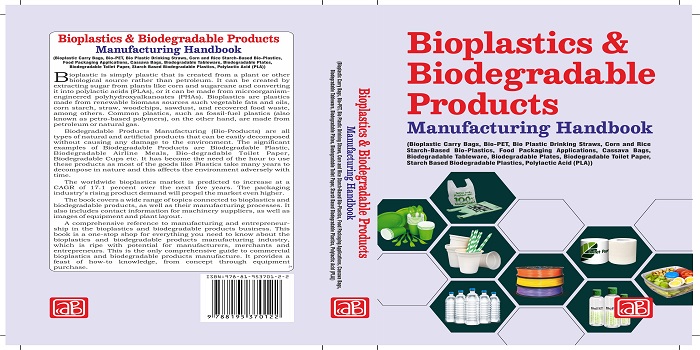
The Biodegradable Products Manufacturing Handbook is a vital guide for entrepreneurs looking to launch eco-friendly businesses in today’s sustainability-focused economy. With rising environmental concerns, increasing government regulations on plastic, and changing consumer preferences, the demand for biodegradable alternatives is growing rapidly in India and worldwide. This guide outlines key insights into biodegradable product categories, raw materials, machinery, processes, legal standards, and business opportunities. If you’re planning to enter this space, understanding these foundational elements is crucial for long-term success. Start a Business in Biodegradable Products Industry, Click Here What Are Biodegradable Products? Biodegradable products are materials that can naturally break down into non-toxic components through microbial action over time. These products decompose without harming the environment, unlike conventional plastic which takes hundreds of years to degrade. Common Examples of Biodegradable Products: Tableware (plates, spoons, bowls, straws) Carry bags made from corn starch or cassava Compostable garbage bags Biodegradable packaging films Sanitary products and diapers Mulch films for agriculture Cutlery, cups, and takeaway containers 1. Why Start a Biodegradable Products Manufacturing Business? a. Eco-Friendly Demand Surge With bans on single-use plastic and climate change awareness, the Indian market is shifting toward sustainable solutions. b. Government Policies & Incentives India’s ban on single-use plastics and subsidies for green industries create a favorable ecosystem for manufacturing. c. Export Opportunities Countries in Europe, North America, and parts of Asia are major importers of biodegradable products. d. Fast-Growing Market The global biodegradable plastic market is expected to reach USD 20+ billion by 2030, growing at a CAGR of over 13%. Related Feasibility Study Reports: Biodegradable Products 2. Raw Materials Used in Biodegradable Product Manufacturing Choosing the right biodegradable raw material is key to ensuring your product is truly compostable and compliant with regulations. Common Raw Materials Include: Sugarcane Bagasse: A fibrous by-product of sugarcane processing Corn Starch (PLA): Used for films, packaging, and tableware Areca Palm Leaves: Used for eco plates and bowls Rice Husk or Wheat Bran Cassava or Tapioca Starch Paper Pulp and Bamboo Fiber PLA + PBAT (blends) for compostable bags Each material has its own processing technique and shelf life, so understanding compatibility is crucial. 3. Types of Biodegradable Products You Can Manufacture a. Disposable Tableware Plates, spoons, bowls, and containers made from bagasse or areca palm leaves. b. Biodegradable Carry Bags Made using PLA, PBAT, or starch-based formulations. These are commonly used in retail, grocery, and agriculture. c. Compostable Packaging Food wrapping films, trays, containers, and vacuum-sealable bags. d. Agricultural Mulch Films Used to cover soil, these break down over time and enrich the land. e. Biodegradable Cutlery and Straws Popular in the hospitality industry as eco-friendly alternatives. 4. Machinery Required for Manufacturing The selection of machinery depends on the product category. Here are commonly used machines: Pulp Molding Machine – For tableware and packaging Bag Making Machine – For compostable carry bags Injection Molding Machine – For cutlery and containers Film Blowing Machine – For biodegradable films and wraps Hot Press Machine – For palm leaf products Extrusion Machine – For sheets and agricultural films Prices range from ?5 lakh to ?50 lakh depending on capacity and automation levels. Related Books: Environmentally Friendly 5. Manufacturing Process Overview Though the process varies by product, the basic stages include: Raw Material Preparation – Cleaning, grinding, or pulping Forming – Using molds or extrusion to shape products Drying & Trimming – Removing moisture and refining shape Printing or Branding – Optional step for custom designs Packaging – Eco-packaging materials are usually preferred Example: For sugarcane bagasse tableware, the process includes pulping, molding with heat and pressure, drying, and packing. 6. Licenses and Certifications Required Before starting a biodegradable products manufacturing business, it’s essential to comply with local and national guidelines. Required Licenses: Udyam MSME Registration GST Registration Pollution Control Board NOC Factory License Trade License (Municipal) Important Certifications: CPCB/State PCB approval for compostable products ISO 17088 certification for biodegradable plastics Compostability test report from CIPET or BIS labs FDA and FSSAI (for food-contact products) Compliance helps build brand credibility and facilitates export approval. 7. Investment and Profit Margin Initial Setup Cost (for small unit): Machinery: ?10 – ?30 lakh Raw Material stock: ?2 – ?5 lakh Setup cost (shed, electricity, etc.): ?5 – ?10 lakh Labor & Operation: ?1.5 lakh/month Expected Monthly Profit: Turnover: ?4 – ?10 lakh/month (depends on scale) Profit Margin: 25% – 40% (after breakeven) Break-even Period: 12–18 months for small-scale units The business is scalable, and exporting increases profits significantly. 8. Target Market and Customers Your customers may include: Retail stores and supermarkets E-commerce packaging suppliers Hotel and restaurant chains Hospitals and food caterers Agri-input suppliers (for mulch films) Government organizations for public use International wholesalers and distributors A strong B2B sales team or digital presence can help scale rapidly. 9. Marketing Strategy for Biodegradable Products Highlight eco-benefits and government compliance Create a brand identity around sustainability Focus on B2B partnerships with restaurant chains and retailers Use green packaging and certifications in your branding Social media campaigns to build eco-conscious communities List on B2B platforms like IndiaMART, TradeIndia, Alibaba Conclusion This Biodegradable Products Manufacturing Handbook offers a complete overview for entrepreneurs aiming to build an environmentally responsible business. With increasing global demand for plastic-free solutions, India has the resources, policy support, and raw materials to lead in biodegradable product manufacturing. Whether you’re targeting tableware, packaging, or agri-products, this is the right time to step into this booming market and align profits with the planet. Be sure to maintain quality, compliance, and eco-authenticity to build long-term brand value. Read Similar Articles: Biodegradable products See More Links: Start a Business in Asia Start a Business in Potential Countries for Doing Business Best Industry for Doing Business Business Ideas with Low, Medium & High Investment Looking for Most Demandable Business Ideas for Startups Start a Business in Africa</strong> Start a Business in India Related Projects Related Market Research Reports NIIR PROJECT CONSULTANCY SERVICES, DELHI An ISO 9001:2015 Company ENTREPRENEUR INDIA 106-E, Kamla Nagar, Opp. Mall ST, New Delhi-110007, India. Email:
A Handbook on How to Manufacture Bioplastics and Biodegradable Products
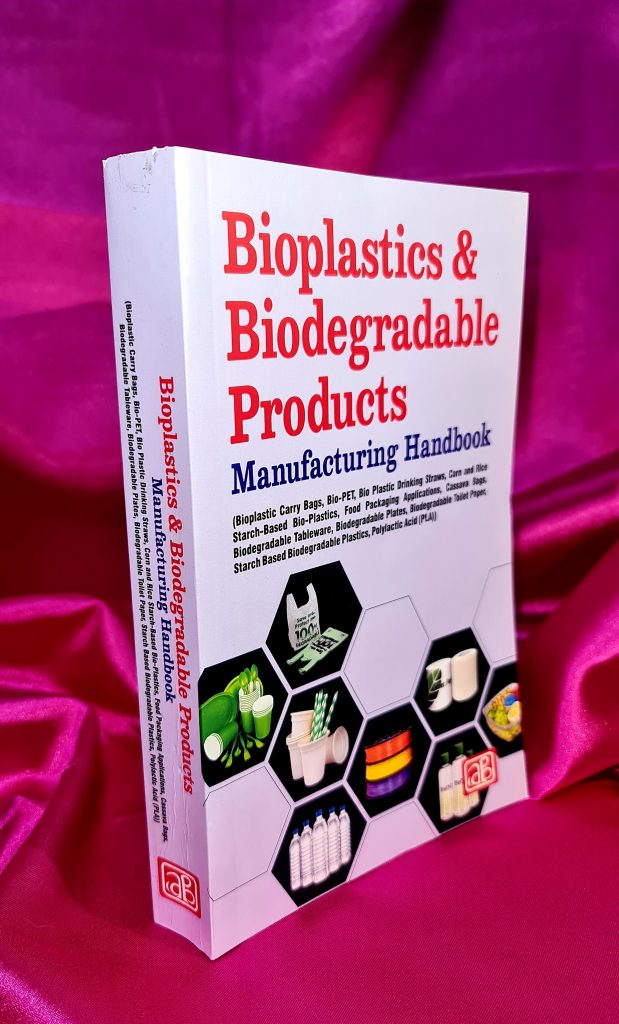
Understanding the Future of Bioplastics and Eco-Friendly Manufacturing In a world grappling with climate change, resource depletion, and an overdependence on petroleum-based products, bioplastics have emerged as a beacon of sustainable innovation. These eco-friendly materials are transforming the manufacturing industry by replacing traditional plastics with renewable, biodegradable alternatives. As governments push for greener policies and consumers demand ethical, low-impact products, the relevance of bioplastics is growing exponentially. Bioplastics represent a class of materials that are either bio-based, biodegradable, or possess both properties. They offer an environmentally conscious choice without compromising performance or durability. Through this detailed handbook, we will explore the raw materials, production processes, types, environmental impact, industrial applications, and future scope of bioplastics and eco products. What Are Bioplastics? Exploring the Basics Bioplastics are not a single material but a family of materials with varying properties and applications. The term typically refers to two types of plastics: Bio-based plastics, which are partially or wholly derived from renewable biological sources. Biodegradable plastics, which can decompose naturally by the action of microorganisms. Some bioplastics meet both criteria, such as PLA (Polylactic Acid) and PHA (Polyhydroxyalkanoates), offering a double advantage in sustainability. However, not all bio-based plastics are biodegradable (e.g., bio-PET), and not all biodegradable plastics are bio-based (e.g., PBAT). This diversity allows manufacturers to choose materials tailored to specific product needs while maintaining an environmentally responsible approach. Sourcing Sustainable Raw Materials The foundation of any bioplastics production system lies in its raw materials. Commonly used feedstocks include: Starch-rich crops like corn, potatoes, and cassava. Sugars extracted from sugarcane, sugar beets, or sweet sorghum. Cellulose from wood pulp or agricultural residue. Vegetable oils, especially from soybeans, castor, or canola. Microalgae and bacteria for advanced polymer synthesis. Using agricultural waste or non-food biomass (second-generation feedstock) is gaining traction to avoid food-versus-fuel conflicts. These renewable materials not only reduce greenhouse gas emissions but also support rural economies by creating new markets for biomass. Types of Bioplastics and Their Unique Applications Bioplastics are classified based on their chemical composition and degradation profile. Some prominent types include: Polylactic Acid (PLA) Derived from fermented plant starch (usually corn or sugarcane), PLA is one of the most commercially available bioplastics. It is transparent, compostable, and widely used in: Packaging Disposable utensils Textile fibers Medical implants and drug delivery systems Polyhydroxyalkanoates (PHA) PHA is produced via microbial fermentation of sugar or lipids. It degrades in marine, soil, and industrial compost environments. Applications include: Agricultural films Bottles and containers Biomedical applications like sutures and tissue scaffolding Starch-Based Bioplastics Starch, a naturally biodegradable polymer, is often blended with other biopolymers or plasticizers. Common uses are: Shopping bags Disposable trays and plates Foam packaging materials Bio-PET and Bio-PE These materials have the same structure as conventional PET and PE but are made from plant-based ethanol. They are recyclable but not biodegradable. Used in: Beverage bottles (Coca-Cola’s PlantBottle) Detergent containers Cosmetic packaging PBAT (Polybutylene Adipate Terephthalate) While not bio-based, PBAT is fully biodegradable and often blended with starch or PLA to enhance flexibility and degradation. Widely used in compostable bags and agricultural mulch. Step-by-Step Manufacturing Process of Bioplastics Creating bioplastics involves multiple stages, many of which mirror traditional plastic production. Here’s a closer look at the manufacturing flow: Biomass Collection and Pre-TreatmentProducers harvest and pre-process organic raw materials by drying, crushing, or fermenting them to extract sugars or starches. Fermentation or Polymerization For PLA: Sugars are fermented to produce lactic acid, which undergoes polymerization into PLA. For PHA: Bacteria ferment sugars/lipids into biopolymers stored inside their cells. For bio-PE: Ethanol from sugarcane is dehydrated to produce ethylene, which is polymerized into polyethylene. Polymer ProcessingPolymers are cooled, solidified, and pelletized. These pellets are the basic raw input for various plastic processing techniques. Shaping and MoldingDepending on the final product, techniques like injection molding, extrusion, blow molding, and thermoforming are used to shape bioplastic items. Quality Control and PackagingThe team tests the final products for strength, flexibility, heat resistance, and biodegradability before packaging and distributing them. Eco Products: A Glimpse into the Future of Sustainable Goods Bioplastics are revolutionizing product development in numerous sectors. Popular eco products include: Biodegradable food packaging: Clamshell containers, films, wrappers Compostable tableware: Plates, bowls, and cups for food services Agricultural tools: Mulch films and seedling trays that decompose into the soil 3D printing filaments: PLA-based filaments for eco-friendly prototyping Textile fibers: Bioplastic-based threads for sustainable fashion Consumer electronics casings: Phone and tablet covers Medical applications: Biodegradable sutures, capsules, and scaffolding These products offer superior end-of-life disposal options, reducing the environmental burden significantly compared to traditional plastics. Environmental and Economic Impact The life cycle of bioplastics from cradle to grave shows tremendous promise: Reduced Carbon Footprint: Lower emissions during production and often carbon sequestration during biomass growth. End-of-Life Options: Industrial composting, home composting, or anaerobic digestion. Energy Efficiency: While production still requires energy, bio-based sources often lead to energy savings in later stages. On the economic front, the bioplastics industry is generating new employment, revitalizing agricultural sectors, and encouraging green technology investments. As oil prices fluctuate, bioplastics also offer pricing stability. Challenges in Bioplastics Adoption Despite clear advantages, bioplastics face some hurdles: Higher Initial Costs: Due to emerging technologies and limited scale. Lack of Infrastructure: Most regions lack industrial composting or separate collection systems. Public Misunderstanding: Terms like “biodegradable” and “compostable” are often confused, leading to misuse and improper disposal. Performance Limitations: Some bioplastics may not offer the same barrier properties or heat resistance as fossil plastics. Addressing these challenges requires technological innovation, policy support, and public education. The Global Bioplastics Market: A Growing Industry The global bioplastics market is on a rapid upward trajectory. It is expected to reach over $25 billion by 2030. Key growth drivers include: Stringent environmental regulations in Europe and North America Rising awareness and demand for sustainable packaging in Asia-Pacific Corporate ESG commitments across industries Multinational companies like Nestlé, Danone, Toyota, and IKEA are already incorporating bioplastics into their supply chains. Governments are introducing bans on single-use plastics, further driving adoption. Regulatory Framework
Bioplastics & Biodegradable Products Manufacturing Handbook
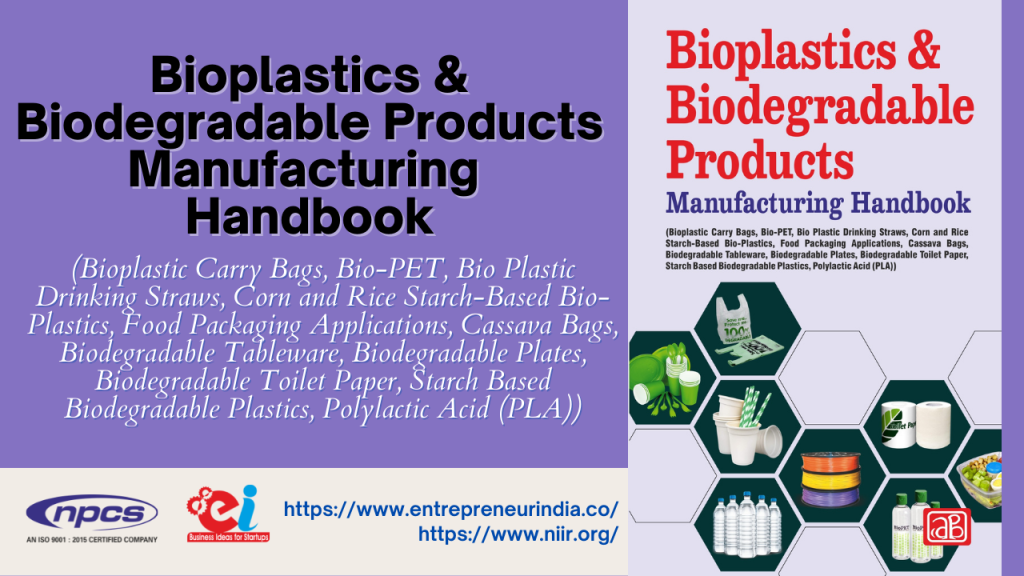
The Bioplastics & Biodegradable Products Manufacturing industry is emerging as a revolutionary sector in the global effort to combat plastic pollution. With governments, corporations, and consumers moving toward sustainable alternatives, bioplastics are gaining traction across packaging, agriculture, medical, and consumer goods industries. Bioplastics, derived from renewable sources like corn starch, sugarcane, or cellulose, offer eco-friendly properties such as biodegradability and compostability. For entrepreneurs and manufacturers, this is a high-potential, future-ready industry that aligns profitability with planet-positive impact. Investing in bioplastics and biodegradable manufacturing can future-proof your business while serving growing demand. Market Potential and Growth Drivers The global bioplastics and biodegradable market is projected to exceed $25 billion by 2027, growing at a rapid pace due to stringent environmental policies, rising awareness, and corporate sustainability goals. In India, the government has already banned single-use plastic items, encouraging manufacturers to switch to alternatives. This gives a massive boost to the Bioplastics & Biodegradable Products Manufacturing sector. Key industries fueling this demand include food packaging, agriculture films, disposable cutlery, bags, and medical disposables. With customers increasingly seeking green certifications and plastic alternatives, a manufacturing setup can cater to both B2B bulk buyers and eco-conscious retail markets. Startups in this field are also receiving funding support from sustainability-focused investors, further increasing its feasibility and growth prospects. Books Link: Bioplastics & Biodegradable Products Manufacturing Handbook (Bioplastic Carry Bags, Bio-PET, Bioplastic Drinking Straws, Corn and Rice Starch-Based Bioplastics, Food Packaging Applications, Cassava Bags, Biodegradable Tableware, Biodegradable Plates Raw Materials and Feedstock Sources Raw materials for Bioplastics & Biodegradable Products Manufacturing typically include renewable, plant-based resources such as corn starch, tapioca, sugarcane bagasse, and cellulose. Some specialty polymers like PLA (Polylactic Acid), PHB (Polyhydroxybutyrate), and PBS (Polybutylene Succinate) are also widely used. Depending on the end-use, other materials like starch blends or bio-PET may be added to enhance performance. India’s agricultural diversity provides easy access to feedstock like cassava, maize, and agricultural waste that can be processed to produce biodegradable polymers. Partnerships with sugar mills, starch industries, or agro-waste processing plants can help reduce input costs while ensuring sustainability. Waste valorization from food or crop industries also adds value to the supply chain and strengthens the green story of your business. Read Similar Articles: Biodegradable products Manufacturing Process and Machinery The Bioplastics & Biodegradable Products Manufacturing process involves polymer extraction or compounding followed by product molding or extrusion. The exact process depends on the desired output—bags, cutlery, films, containers, or packaging sheets. The basic steps include: Polymer mixing and plasticization Extrusion or injection molding Product shaping and finishing Cooling, trimming, and packing Machinery requirements include extruders, injection molding machines, thermoforming units, pelletizers, and film blowers. Fully automatic systems are available for high-speed production. Temperature and moisture control are critical during processing, as biodegradable materials often have different thermal behaviors than petroleum-based plastics. A typical medium-sized plant requires 5,000–10,000 sq. ft. of production space. Start a Business in Biodegradable Products Industry, Click Here Investment and Profit Margins Setting up a Bioplastics & Biodegradable Products Manufacturing unit involves a moderate to high investment depending on scale, automation, and product diversity. A small-scale setup with film extrusion and bag making capabilities may start from ?35–50 lakh, whereas a mid-sized multiproduct unit may need ?1.5–2.5 crore. Breakdown of costs includes: Machinery and equipment: 40–50% Infrastructure and utilities: 20% Raw materials and packaging: 20% Certifications and legal compliance: 5–10% The selling price of bioplastic products is usually 2–3x that of conventional plastic due to material and processing cost, but customers pay the premium for environmental benefits. Gross margins can be as high as 30% in retail products and 15–20% in bulk B2B orders. Long-term contracts with FMCG brands, exporters, and packaging companies ensure consistent returns. Related Feasibility Study Reports: Biodegradable Products, Recyclable, Disposable, Eco-Friendly Plastics, Bioplastics, Compostable, Biodegradable Packaging for Food Products, Bio-based Polymers, Oxo-biodegradable Plastics, Bio-nanocomposites using Maize, Corn, Sugarcane Bagasse Licensing and Regulatory Compliance Operating a Bioplastics & Biodegradable Products Manufacturing unit in India requires you to meet specific legal and environmental guidelines. These include: Udyam MSME registration GST registration Pollution Control Board clearance BIS certification for biodegradable bags CPCB (Central Pollution Control Board) approvals ISO 14001 (Environmental Management) and ISO 9001 (Quality) for larger plants For compostable products, your material needs to pass IS/ISO 17088 testing and obtain CPCB approval to be recognized as “certified biodegradable.” Exporters also require FDA or EU Food Contact certifications depending on destination markets. Transparent labeling, quality consistency, and documentation are key to building trust with regulatory bodies and end-users. Related Books: Environmentally Friendly, Eco-Friendly Products, Natural Products, Biodegradable Plastics, Natural Dyes and Pigments, Jute Products, Natural Fibers Marketing and Sales Strategy The demand for Bioplastics & Biodegradable Products Manufacturing output spans multiple industries. Your sales strategy should target: Food & beverage brands E-commerce and retail packaging suppliers Supermarkets and organic stores Pharma and medical equipment makers Agro film users (mulching films, plant pots) Sales channels include distributor networks, online platforms (B2B and B2C), trade shows, and CSR-aligned partnerships. Storytelling is important—highlighting eco-benefits, carbon savings, and certifications in your brand positioning enhances appeal. Offering private labeling or custom molds for business buyers also increases value and loyalty. Sustainability and Long-Term Impact The biggest advantage of Bioplastics & Biodegradable Products Manufacturing lies in its contribution to sustainability. It reduces dependency on fossil fuels, minimizes landfill load, and aligns with global climate targets. These products decompose in natural conditions, leaving no toxic residue, making them safe for soil, water, and wildlife. This business contributes to a circular economy by turning biomass or waste into valuable, non-polluting products. It empowers industries to meet their EPR (Extended Producer Responsibility) obligations and gain carbon credits. For businesses, it’s not just profit—it’s purpose-driven innovation. Future Scope and Expansion As the world transitions away from petroleum-based plastics, the Bioplastics & Biodegradable Products Manufacturing sector is poised for explosive growth. The future includes: Edible or water-soluble films Biodegradable PPE and medical disposables Compostable courier packaging for e-commerce Bioplastic 3D printing filaments Integration with AI-based waste sorting systems The technology and
Investment Opportunities in Manufacturing Business of Bromelain Enzyme from Pineapple Stems.
In the age of green innovation and sustainable entrepreneurship, the Bromelain enzyme business presents a unique opportunity. This valuable enzyme, found primarily in pineapples, has wide-ranging applications across pharmaceuticals, cosmetics, food processing, and agriculture. Extracting bromelain from pineapple waste not only supports zero-waste practices but also offers an economically viable model for new businesses. As global awareness of environmental sustainability rises, utilizing agricultural by-products such as pineapple peels, cores, and stems to extract bromelain opens doors for a low-cost, high-value venture. Why Bromelain Enzyme is a Booming Opportunity Bromelain is a complex mixture of proteolytic enzymes derived from the pineapple plant (Ananas comosus). Traditionally, the extraction of this enzyme focused on the juice or stem, but recent innovations have made it possible to efficiently extract bromelain from pineapple waste. This makes the business highly attractive in regions with large-scale pineapple production like India, Thailand, the Philippines, Brazil, and parts of Africa. With the global bromelain enzyme market expected to grow steadily due to increasing demand in health supplements, wound healing, meat tenderizing, and anti-inflammatory applications, now is an ideal time to invest in bromelain enzyme production. Here’s a detailed guide to understanding the bromelain enzyme business, especially focusing on its manufacturing process from pineapple waste. Understanding Bromelain and Its Uses What is Bromelain? Bromelain is a group of enzymes that break down protein molecules. It is naturally found in the pineapple fruit and stem, but the highest concentration is in the stem and waste parts, such as the core and peel. It has powerful anti-inflammatory, digestive, and therapeutic properties. Key Applications of Bromelain Enzyme Pharmaceuticals: As a natural anti-inflammatory, bromelain is used in treating arthritis, sinusitis, and post-operative swelling. Nutraceuticals: Included in dietary supplements for digestion support and immune boosting. Cosmetics: Used in skin rejuvenation creams and anti-aging formulas due to its exfoliating properties. Food Industry: Acts as a meat tenderizer and is used in brewing, baking, and clarification of juices. Agriculture: Enhances nutrient absorption in animals and improves feed conversion in poultry. The Business Model: Extracting Bromelain from Pineapple Waste Step-by-Step Manufacturing Process Extracting bromelain enzyme from pineapple waste involves multiple stages. Here is a comprehensive view of the process: 1. Collection and Preparation of Raw Material Pineapple waste such as peels, cores, and stems are collected from juice plants or fruit markets. These parts are rich in bromelain and often discarded. 2. Cleaning and Crushing The collected waste is washed thoroughly to remove any dirt or chemical residue. It is then crushed or ground into pulp using industrial grinders. 3. Extraction Mix the pulp with a cold buffer solution, often phosphate buffer at pH 7.0. This solution helps release the enzyme. Then, filter the mixture to separate the juice containing the enzyme. 4. Filtration and Centrifugation The juice is filtered and centrifuged to eliminate insoluble particles, leaving behind a clear solution rich in bromelain. 5. Purification Advanced techniques like ammonium sulfate precipitation, dialysis, and column chromatography are used to purify bromelain. 6. Drying The purified enzyme is freeze-dried or spray-dried to convert it into powder form, making it suitable for commercial packaging. 7. Packaging The dried bromelain enzyme powder is packed in moisture-proof containers under hygienic conditions for distribution. Investment Requirements and Plant Setup h3: Infrastructure and Equipment Setting up a Bromelain enzyme manufacturing unit requires a semi-industrial plant with: Stainless steel reactors and mixers Centrifuge machines Freeze dryers or spray dryers Filtration systems Cold storage units Quality testing lab h4: Estimated Capital Investment Small-scale unit: ?20–25 lakhs (USD $25,000–$35,000) Medium-scale plant: ?50–60 lakhs (USD $60,000–$75,000) The investment can vary depending on automation levels, location, and availability of raw materials. Licensing and Compliance Starting a Bromelain enzyme business involves certain legal and regulatory steps: FSSAI license for food-grade bromelain GMP certification for pharmaceutical-grade production Pollution Control Board clearance Factory license under the Factories Act IEC code for exports Market Demand and Export Potential Growing Global Demand The bromelain enzyme market will surpass $60 million by 2030, growing at a CAGR of 6–8%. Rising preference for plant-based enzymes and natural therapeutic agents drives this demand. Key Export Markets USA Germany Japan Canada South Korea With India being a major pineapple producer, entrepreneurs here can leverage cost-effective raw materials and labor to tap into this global demand. Profit Margins and ROI Extracting Bromelain enzyme from pineapple waste not only reduces raw material costs but also supports environmental sustainability. The cost of waste collection is minimal, and the market price of bromelain powder ranges from ?2,000 to ?6,000 per kg depending on purity. On average: Yield: 3–5 kg of bromelain per ton of pineapple waste Monthly revenue: ?3–5 lakhs for small-scale units ROI: Within 1.5 to 2 years under proper management Challenges in Bromelain Enzyme Business Key Hurdles to Address Raw Material Consistency: Seasonal availability of pineapple may affect year-round production. Extraction Efficiency: Enzyme yield can vary depending on process optimization. Storage: Bromelain is temperature-sensitive; hence, cold chain logistics is essential. Regulatory Hurdles: Export regulations and certifications can be complex for pharmaceutical applications. Sustainability and Environmental Impact One of the biggest advantages of the Bromelain enzyme business is its eco-friendliness. By converting waste into wealth, the process minimizes landfill burden and promotes circular economy principles. Additionally, minimal chemical usage makes the process safer for workers and the environment. Future Outlook and Innovation What Lies Ahead? The future of bromelain enzyme production is bright, especially with growing interest in green biotechnology. Advanced extraction methods like enzyme-assisted extraction and membrane filtration are increasing yield and purity. Furthermore, research is underway to genetically modify microbes for bromelain synthesis, potentially reducing dependence on pineapple entirely. Startups and researchers are also exploring combinations of bromelain with other enzymes like papain and trypsin to develop multi-functional enzyme complexes, expanding its application base. Final Thoughts Starting a Bromelain enzyme manufacturing business using pineapple waste is a promising venture for those looking to combine profitability with sustainability. With rising global demand, affordable raw materials, and growing awareness of natural enzymes, this business offers strong ROI and export potential.