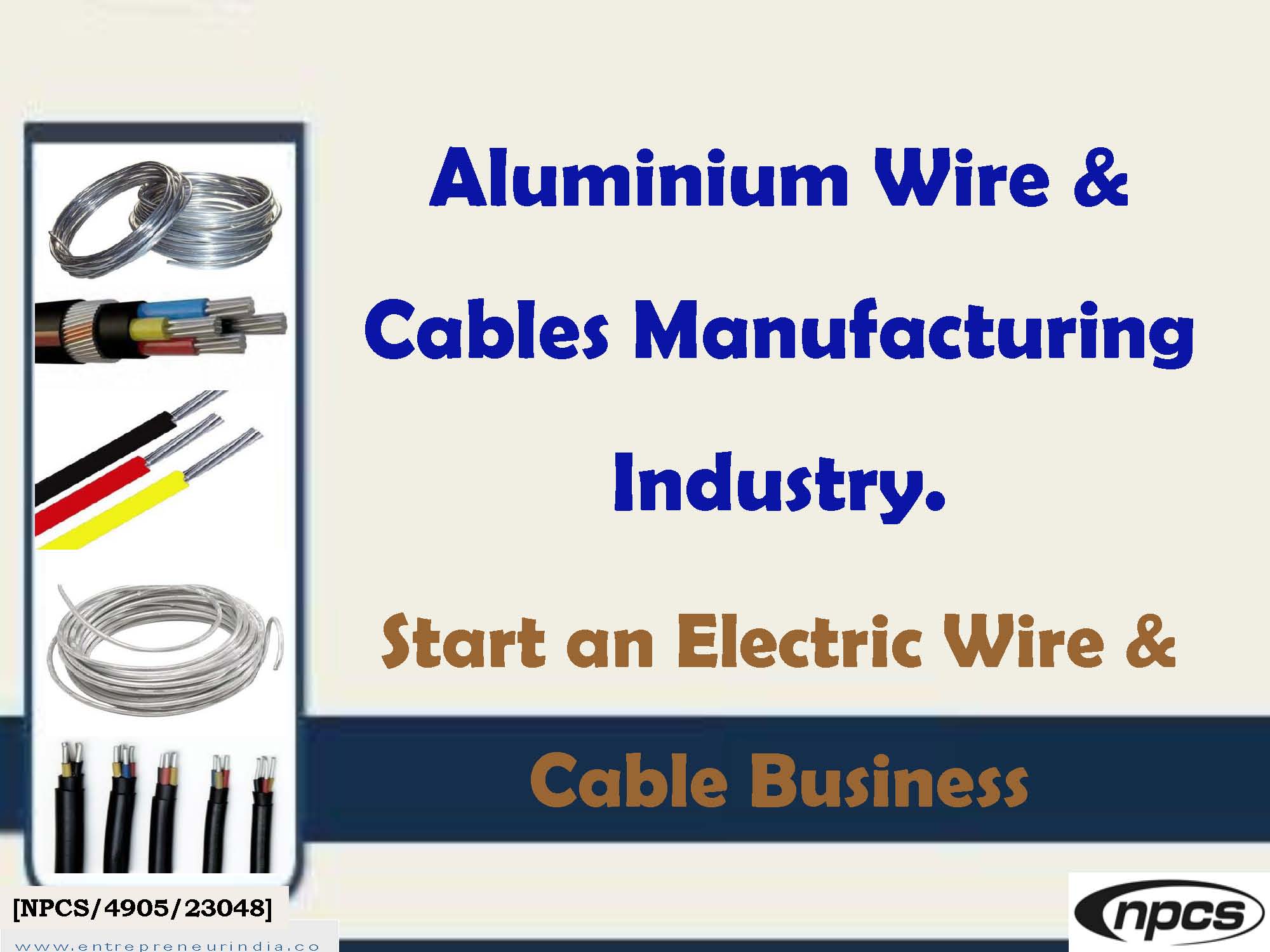
The Aluminium Wire & Cables Manufacturing Industry plays a critical role in powering modern infrastructure. With rapid urbanization, electrification of rural areas, and rising demand for reliable power distribution systems, aluminium wires and cables have emerged as cost-effective and lightweight alternatives to traditional copper wiring. Their excellent conductivity, lower weight, and corrosion resistance make them indispensable across industries—from construction and utilities to telecom and automotive sectors. Entrepreneurs exploring industrial manufacturing opportunities will find that the Aluminium Wire & Cables Manufacturing Industry offers long-term profitability, scalability, and high demand in both domestic and export markets.
Growing Demand and Industry Overview
The global market for aluminium wires and cables is expected to grow steadily, driven by infrastructure projects, smart city developments, and electric vehicle (EV) expansion. India, being one of the world’s largest consumers of electricity, has seen significant investments in the transmission and distribution (T&D) segment. These developments directly boost the Aluminium Wire & Cables Manufacturing Industry.
Aluminium is 60% lighter and significantly cheaper than copper, making it the preferred choice for overhead power lines, building wiring, and telecom cables. With government initiatives like “Power for All,” rural electrification, and growing private sector investments, the demand for aluminium-based electrical solutions continues to rise, especially in tier-2 and tier-3 cities.
Applications Across Key Sectors
The Aluminium Wire & Cables Manufacturing Industry serves a wide variety of end users. Some of the primary application segments include:
Power Distribution – Overhead conductors, underground power cables, and substation connectors
Construction and Real Estate – Residential, commercial, and industrial buildings for internal wiring
Telecommunications – Telephone and coaxial cables
Automotive – Lightweight wiring harnesses for vehicles
Electronics – Armoured and flexible cables for electrical appliances and panels
As industries grow increasingly digital and electricity-dependent, aluminium conductors continue to replace their copper counterparts across multiple domains.
Types of Aluminium Cables and Wires
Understanding product variety is crucial in the Aluminium Wire & Cables Manufacturing Industry. Major types include:
AAC (All Aluminium Conductors) – Lightweight, corrosion-resistant wires for overhead power transmission
AAAC (All Aluminium Alloy Conductors) – Stronger and more durable, used in high-voltage lines
ACSR (Aluminium Conductor Steel Reinforced) – Combined with steel for added strength
XLPE Insulated Cables – Used in underground installations and buildings
Armoured Cables – Provide mechanical protection, suitable for industrial applications
By catering to different customer needs and voltage levels, manufacturers can target multiple market segments and reduce dependency on a single product line.
Production Process Overview
Setting up a Aluminium Wire & Cables Manufacturing Industry unit involves a systematic production process:
Raw Material Preparation – Aluminium ingots or rods are inspected and loaded
Wire Drawing – Aluminium is passed through drawing machines to achieve the desired diameter
Annealing – Softens the drawn wire for flexibility and durability
Stranding and Twisting – Multiple wires are twisted together for strength
Insulation and Sheathing – PVC, XLPE, or rubber compounds are applied depending on the product specification
Armouring (if applicable) – Steel or aluminium strips are wrapped around the insulated cable
Quality Testing – Wires are tested for conductivity, insulation resistance, and mechanical properties
Coiling, Packaging, and Dispatch – Finished products are coiled and packaged for delivery
Modern automation and quality control systems ensure consistent performance and industry compliance.
Machinery and Setup Requirements
For a small to medium-scale Aluminium Wire & Cables Manufacturing Industry unit, key equipment includes:
Rod breakdown and wire drawing machines
Annealing furnaces
Stranding machines and bunchers
Insulation extruders
Armouring and sheathing lines
Cable coiling, cutting, and packing machines
Testing equipment – for high voltage, insulation, and tensile strength
A facility of approximately 12,000 to 20,000 sq. ft. is typically required depending on automation and production capacity.
Raw Materials Used in Production
Key raw materials used in the Aluminium Wire & Cables Manufacturing Industry include:
Aluminium rods or EC-grade aluminium ingots
Insulation compounds like PVC, XLPE, and PE
Armouring materials – galvanised steel or aluminium strips
Packaging materials – cable drums, boxes, and wrapping films
Cooling water, lubricants, and electrical power
Sourcing high-quality EC-grade aluminium ensures conductivity and product longevity, which are critical for retaining customer trust.
Investment and Financial Insights
Starting a Aluminium Wire & Cables Manufacturing Industry plant requires a sizable initial investment, largely depending on scale:
Land & infrastructure: ?50 lakh – ?1 crore
Machinery and tools: ?1.5 – ?3 crore
Raw material inventory: ?50 – ?70 lakh
Labor and operations (initial months): ?20 – ?30 lakh
Utility and licensing expenses: ?10 – ?15 lakh
Thus, a medium-sized unit may need a total investment of around ?2.5 – ?4 crore. Profit margins can range from 15% to 30%, especially with value-added cables and direct contracts with power utilities or builders. ROI is usually achievable within 3 years of operation.
Licensing, Compliance, and Quality Certifications
To operate legally in the Aluminium Wire & Cables Manufacturing Industry, the following approvals and licenses are necessary:
Company Registration and GST
Pollution Control Board clearance
Factory License and Electricity Board approval
BIS Certification (IS 8130, IS 694, etc.)
ISO 9001 and ISO 14001 (optional but preferred for exports)
Bureau of Energy Efficiency (BEE) ratings for energy-saving cable types
Maintaining rigorous testing and documentation will not only ensure compliance but also improve product acceptability in global markets.
Marketing and Sales Strategy
To succeed in the Aluminium Wire & Cables Manufacturing Industry, manufacturers must build a robust distribution network and strategic alliances. Effective marketing strategies include:
Partnering with real estate developers and contractors
Collaborating with state electricity boards and telecom providers
Distributing through electrical wholesale networks
Listing products on B2B platforms like IndiaMART and TradeIndia
Showcasing at trade expos, exhibitions, and industry fairs
Running digital campaigns and LinkedIn outreach to attract commercial clients
Building long-term relationships through consistent product quality and timely deliveries will ensure repeat business and market growth.
Government Support and Incentives
Government initiatives supporting the Aluminium Wire & Cables Manufacturing Industry include:
Credit Linked Capital Subsidy Scheme (CLCSS)
MSME Registration Benefits – tax concessions, easier loans
PLI Scheme for manufacturing and electrical equipment
Technology Upgradation Funds for modernization
Export Promotion Programs under DGFT
Electricity duty exemptions in some industrial zones
Utilizing these schemes can lower capital costs and improve cash flow during early stages of the business.
Conclusion
The Aluminium Wire & Cables Manufacturing Industry is deeply intertwined with the growth of energy infrastructure, digital connectivity, and modern construction. Its relevance is set to expand as countries adopt smarter, safer, and greener power distribution networks. Entrepreneurs venturing into this sector can build a scalable business with consistent demand, recurring orders, and solid margins. By investing in quality manufacturing practices, regulatory compliance, and innovative marketing, you can tap into the full potential of the Aluminium Wire & Cables Manufacturing Industry and power progress—literally and economically.
Niir Project Consultancy Services
An ISO 9001:2015 Company
106-E, Kamla Nagar, Opp. Spark Mall,
New Delhi-110007, India.
Email: npcs.ei@gmail.com , info@entrepreneurindia.co
Tel: +91-11-23843955, 23845654, 23845886, 8800733955
Mobile: +91-9811043595
Website: www.entrepreneurindia.co , www.niir.org